
Hanhaba Obi vs Nagoya Obi: Which Is Better for Your Kimono Style?
If you're choosing between a hanhaba obi and a nagoya obi for your kimono wardrobe, you're deciding between two fundamentally different approaches to traditional Japanese styling. This choice matters because it affects not only your comfort and ease of dressing, but also determines which occasions and kimono outfits you can confidently wear. Choosing an obi affects the formality of the kimono outfit, so getting this right is essential. The single biggest difference that decides it: hanhaba obi prioritizes simplicity and casual versatility, while nagoya obi offers structured elegance for semi-formal occasions.
The short answer: Choose hanhaba obi if you want maximum ease and casual versatility - it's perfect for yukata, everyday wear, and modern street styling at roughly 15–17 cm in width. Choose nagoya obi if you prefer the classic structured taiko knot for semi-formal occasions and elevated casual looks, despite requiring more tying skill and additional accessories. Most beginners should start with a hanhaba obi and add a nagoya obi once they're ready to expand into dressier settings.
What Is Hanhaba Obi?
Hanhaba obi (半幅帯) translates literally to "half-width obi," meaning it is about half the width of other obi types. Hanhaba obi measures approximately 17 centimeters in width - roughly half of a standard obi's 30 cm - and typically runs 360–400 cm in length. It is the most casual type of obi and is primarily worn with summer cotton yukata, casual kimono, and modern hybrid style outfits.
What makes hanhaba obi so appealing is its lightweight, often double-sided design. Because it is usually unlined or single-layer, this soft obi allows for creative knot styles and playful designs without any structural accessories. It does not typically require a core for tying, making it exceptionally easy to tie without assistance - perfect for beginners or anyone who values quick, fuss-free dressing. Fabrics tend toward cotton, linen, synthetic blends, and sometimes light silk, keeping it breathable and comfortable for everyday kimono and festival wear.
What Is Nagoya Obi?
The Nagoya obi originated in the Taisho era (1912–1926) as a practical, simplified version of the heavier formal fukuro obi. One account traces its invention to a teacher at Nagoya Girls' School who wanted to make wearing kimono more manageable for women in public and educational settings. Nagoya obi became popular after the Great Kanto Earthquake in 1923, when practical dressing took on new urgency.
Structurally, a nagoya obi features a half-width section (the part that wraps around the torso) and a full-width section for knotting, specifically for creating the classic Otaiko (drum) knot. Nagoya obi measures approximately 30.4 cm in width at its full-width portion and around 360 cm in length. This nagoya style is wider, more substantial, and more structured than hanhaba obi, occupying a middle ground in the formality hierarchy: less formal than fukuro obi, but significantly more polished than a casual obi like hanhaba. Depending on fabric, pattern, and the presence of gold or silver threads, a nagoya obi can suit everything from komon to semi-formal occasions like cultural events and dining.
Hanhaba Obi vs Nagoya Obi: How They Compare at a Glance
|
Factor |
Hanhaba Obi |
Nagoya Obi |
|---|---|---|
|
Best for |
Casual wear, yukata, everyday kimono |
Semi-formal kimono, elevated casual looks |
|
Width |
~15–17 cm (a half width of standard) |
~30 cm (full width / same width as formal obi) |
|
Length |
360–400 cm |
~360 cm |
|
Formality level |
Very casual |
Casual to semi-formal |
|
Tying difficulty |
Very easy - no assistance needed |
Moderate - requires practice and accessories |
|
Weight |
Lightweight, minimal bulk |
Medium weight, more structured |
|
Typical occasions |
Festivals, daily wear, street fashion |
Dinner dates, tea ceremony, cultural events |
|
Required accessories |
None (decorative cords optional) |
Obi-makura, obi-age, obijime, obi-ita |
The headline takeaway: hanhaba obi prioritizes ease and comfort, while nagoya obi provides the structure and visual presence needed for dressier occasions.
Formality and Occasions
Among all the types of obi in a kimono wardrobe, formality is the dimension that most sharply separates hanhaba from nagoya. Formality levels of hanhaba obi are classified as casual - it is suited for yukata at summer festivals, casual kimono pairings, everyday wear, and modern street styling with a haori over western clothing. Wearing a hanhaba obi with formal kimono or at highly formal occasions is widely considered a style mismatch in traditional kitsuke etiquette.
Nagoya obi, by contrast, is suitable for casual wear like komon but also appropriate for semi-formal outings like cultural events and dining. The range depends heavily on the obi's material and design: a silk obi with refined motifs or silver threads can elevate an iromuji kimono toward semi-formal territory, while a simple dyed cotton nagoya remains casual. Nagoya obi is less formal than fukuro obi - which is commonly used for formal occasions like weddings - but it covers far more ground than hanhaba ever can.
For context, the formality hierarchy runs roughly: maru obi (the maru obi is now mostly worn by brides) → formal fukuro obi (fukuro obi is the most formal type of obi in regular use, and fukuro obi replaced maru obi as the most formal type) → nagoya obi → hanhaba obi. Other types of obi like heko obi, kaku obi (a men's obi), tsuke obi, and shigoki obi each serve specialized roles but fall outside this core comparison.
Winner: Nagoya obi - it offers broader occasion versatility, spanning casual to semi-formal. However, hanhaba obi owns the casual space with unmatched ease.
Ease of Tying and Learning Curve
This is where hanhaba obi shines most decisively. Hanhaba obi is suitable for casual occasions and easy to tie - its narrow width and lightweight construction allow you to create different knots like bunko musubi, karuta, and kai-no-kuchi entirely on your own, with no accessories and no assistance. Because the entire obi is a consistent half width, there's no pre-folding to manage and no structural elements to position. Most beginners can learn a basic hanhaba knot in a single session.
Nagoya obi is easier to tie than fukuro obi - that was the entire reason it was invented - but it still presents a moderate learning curve. The taiko musubi (drum knot) requires positioning an obi-makura (pillow) at the back, layering the obi-age over it, and securing everything with an obijime cord. Nagoya obi requires additional accessories for tying such as an obi-age and obijime, plus an obi-ita board at the front to prevent bulging. Many beginners need several practice sessions, and some initially require a second pair of hands.
That said, other options exist for those who find nagoya tying daunting: a kantan obi or tsukiri obi offers pre-tied convenience, though these sacrifice some of the artistry. A hassun nagoya obi (a stiffer, unlined variation) and kyusun nagoya obi (a lined, slightly wider variation) each handle slightly differently when tied, so the specific type of nagoya you choose also affects the experience.
Winner: Hanhaba obi - overwhelmingly easier for beginners and quick daily wear. Nagoya obi rewards the effort with more polished results but demands more practice.
Comfort and Weight
For all-day comfort, the physical difference between these two types is immediately noticeable. Hanhaba obi is lightweight and minimal - often a single unlined layer of cotton or linen that wraps snugly without bulk. It breathes well in summer, rarely causes fatigue, and sits gently around the torso. This makes it ideal for long festival days, travel, or anytime you'll be worn out from walking and activity.
Nagoya obi carries more weight by nature. The full-width knot section, lining, and required accessories (obi-ita, obi-makura) create a more substantial structure around your midsection. While this provides better posture support and a more sculpted silhouette, wearers frequently note that nagoya feels noticeably tighter after many hours. In warmer months, the extra layers can reduce breathability - though lighter nagoya obi without heavy silk lining or metallic threads are preferred for summer to mitigate this.
Historically, women's obi width increased from 8 cm to 30 cm by the 19th century, and that full-width standard is what nagoya inherited. The hanhaba obi, by staying at half that width, deliberately trades visual presence for wearability - a philosophy that resonates strongly with modern wearers.
Winner: Hanhaba obi - clearly more comfortable for extended wear. Nagoya obi's structured support benefits those who prefer a tailored feel, but comfort costs increase over time.
Styling Versatility
Styling versatility is where neither obi type fully dominates, because they excel in completely different directions.
Hanhaba obi allows for creative knot styles and playful designs - its reversible, double-sided patterns mean you effectively get two obi in one. The narrow width accommodates a wide range of different knots, from classic bunko to modern free-form bows. Hanhaba pairs beautifully with casual kimono fabrics - cotton, wool, denim, tsumugi - and works as a hybrid style accent when wearing kimono or haori over western clothes. It's the go-to casual obi for experimental, modern looks. Some worn hanhaba obi even find second lives as belts in western fashion, reflecting the sustainability trend in kimono accessories.
Nagoya obi, with its broader, more structured aesthetic, supports the classic taiko knot and other refined musubi styles like tsunodashi. Pattern placement matters more with nagoya: design classifications like zentsu-gara (fully patterned across the entire length), rokutsu-gara (pattern covering about 60% of the obi), and otaiko-gara (pattern focused on portions visible in the taiko knot) influence both visual impression and formality. A share fukuro obi or fukuro nagoya obi can bridge the gap toward more formal looks, while a hakata ori nagoya obi in a simple weave keeps things casual. Rich silk, brocade, and decorative cords give nagoya obi a depth of coordination with various kimono types that hanhaba simply cannot match in dressier contexts.
For men, the styling conversation differs: men's kimono styling typically uses kaku obi or hoso obi rather than either hanhaba or nagoya, though some men's obi share a similar half width with hanhaba. Long sleeved kimono (furisode), chayatsuji kimono, and other specialized women's obi pairings follow their own formality rules beyond this comparison.
Other obi types worth knowing about: hitoe obi (single-layer, similar weight to hanhaba), hara awase obi (lined and reversible), and the rarely worn formal maru obi each fill distinct niches in the broader obi ecosystem.
Winner: Tie - hanhaba obi wins for casual creativity and modern styling; nagoya obi wins for classic coordination and broader kimono pairing. Each excels in its own domain.
Hanhaba Obi vs Nagoya Obi: Which Should You Choose?
-
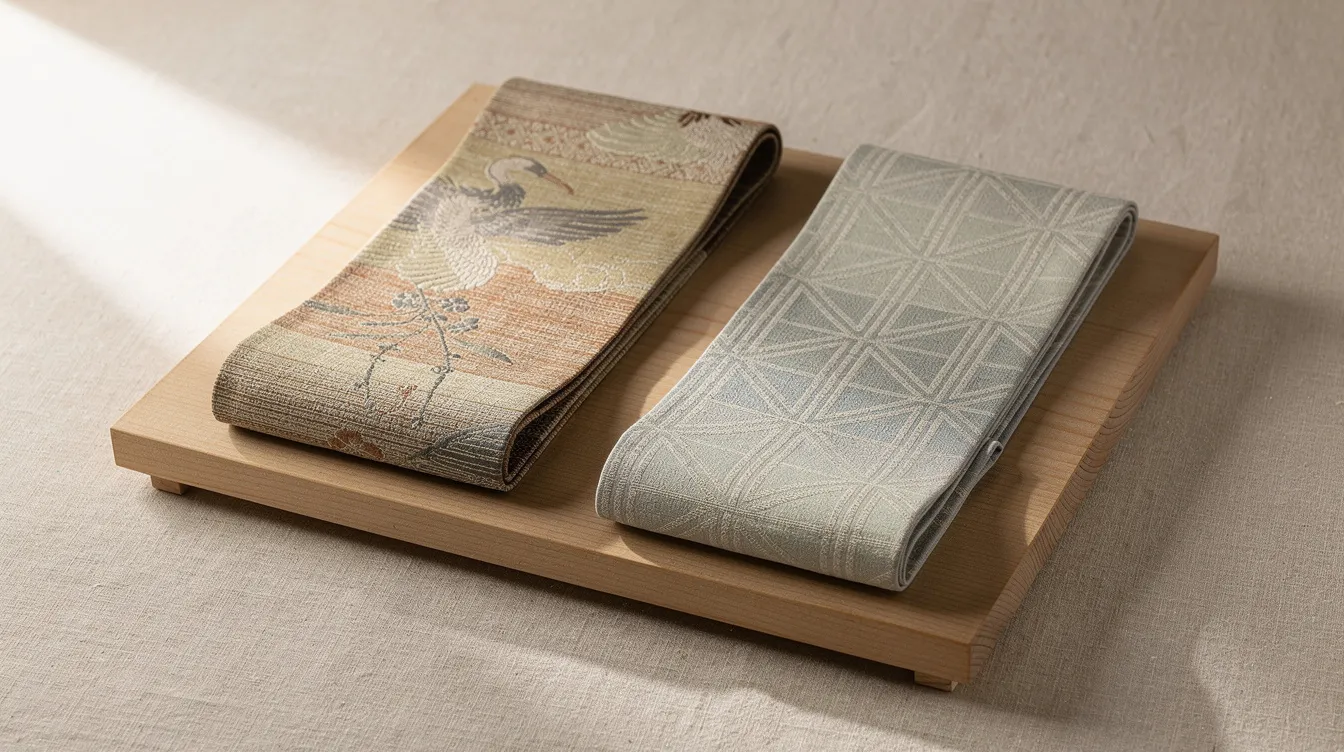
Choose hanhaba obi if you prioritize ease of wear, casual styling, yukata coordination, or modern street fashion. It's the ideal starting point for beginners building their first kimono wardrobe - low cost, high comfort, multiple tying styles, and no extra accessories needed.
-
Choose nagoya obi if you want semi-formal versatility, classic otaiko knots, elevated casual looks, or broader occasion appropriateness. It's the natural next step once you're comfortable with everyday wear and want to attend cultural events, a tea ceremony, or dinner dates with more polish.
For the strongest all-around recommendation: start with a hanhaba obi to build confidence in wearing kimono, then add a nagoya obi to expand your range. Together, they cover nearly every occasion short of formal events (where a formal fukuro obi or formal obi would be required).
If you're looking for obi that bridge traditional craftsmanship with modern sensibility, AnotherDateNight - a small business based in Hong Kong - offers a curated collection of both hanhaba and nagoya obi in contemporary color palettes and rich textures. Their focus on fabric durability, elegant patterns, and wearable traditional design makes them a strong choice for modern lifestyle needs. For U.S. customers, all tariffs are fully included in shipping costs with zero surprise fees on delivery - so you can shop with confidence.
Frequently Asked Questions
Can I wear hanhaba obi with formal kimono?
No - hanhaba obi is classified as casual and should not be paired with formal kimono or worn to formal occasions. Wearing a wide obi like a fukuro obi is expected at events such as weddings. Pairing hanhaba with houmongi or tomesode is considered a significant style mismatch in traditional kitsuke. The exception is creative modern styling where traditional formality rules are intentionally set aside, but even then, know that traditionalists will notice.
How difficult is it to learn nagoya obi tying?
Most beginners can achieve a passable taiko knot within three to five dedicated practice sessions. The key challenges are positioning the obi-makura correctly behind your back and achieving a clean, even drum shape. Video tutorials help enormously. Nagoya obi is easier to tie than fukuro obi (which requires handling the same length at full width throughout), so it's a manageable step up from hanhaba. A regular obi tying class or online course can accelerate the learning curve significantly.
Which obi type offers better value for beginners?
Hanhaba obi generally offers better value for new kimono enthusiasts. Prices tend to be lower - especially for cotton or synthetic blends - and you won't need to purchase additional accessories like obi-makura, obiage, or obijime. A single reversible hanhaba obi effectively functions as two, and it pairs well with affordable cotton yukata and casual kimono. Nagoya obi costs more up front, and the required accessories add to the total investment, but a quality nagoya obi significantly expands the occasions you can dress for.
Can I use the same kimono with both obi types?
Yes - many casual kimono, particularly komon and tsumugi, work beautifully with either obi type. The same kimono worn with a hanhaba obi reads as relaxed everyday wear; swap in a nagoya obi with a proper taiko knot, and the entire outfit elevates toward semi-formal. Keep in mind that proportion matters: the narrower hanhaba creates a different silhouette than the full-width nagoya, so consider how each balances with your body shape and the kimono's fabric weight. Lightweight cotton kimono and yukata pair best with hanhaba, while silk kimono generally look more cohesive with nagoya's broader structure.