

Kimono Posture and Movement: How to Walk, Sit, and Move Gracefully
Kimono Posture and Movement: How to Walk, Sit, and Move Gracefully
Introduction: Why Posture Matters When Wearing a Kimono
Wearing a kimono is a unique sensory and physical experience, and it doesn't have to be intimidating. Whether you're renting a yukata for summer festivals, dressing up for fireworks displays, or exploring Kyoto sightseeing spots, this guide will help you move with confidence from the moment you step outside.
Unlike western clothing, a traditional kimono is built from straight linear panels, wrapped in front, and secured by an obi belt at the waist. This structure creates a wonderful silhouette-but it also means your usual way of walking, sitting, and reaching simply won't work the same way. Posture and movement directly impact both the appearance and comfort of a kimono, so learning a few basics goes a long way. The good news: you don't need advanced knowledge of japanese culture to look and feel great. Japanese people today typically wear kimono for special events, weddings, coming-of-age ceremonies, or sightseeing in places like Kyoto and Asakusa, so even locals brush up on these tips before putting on traditional japanese clothing.
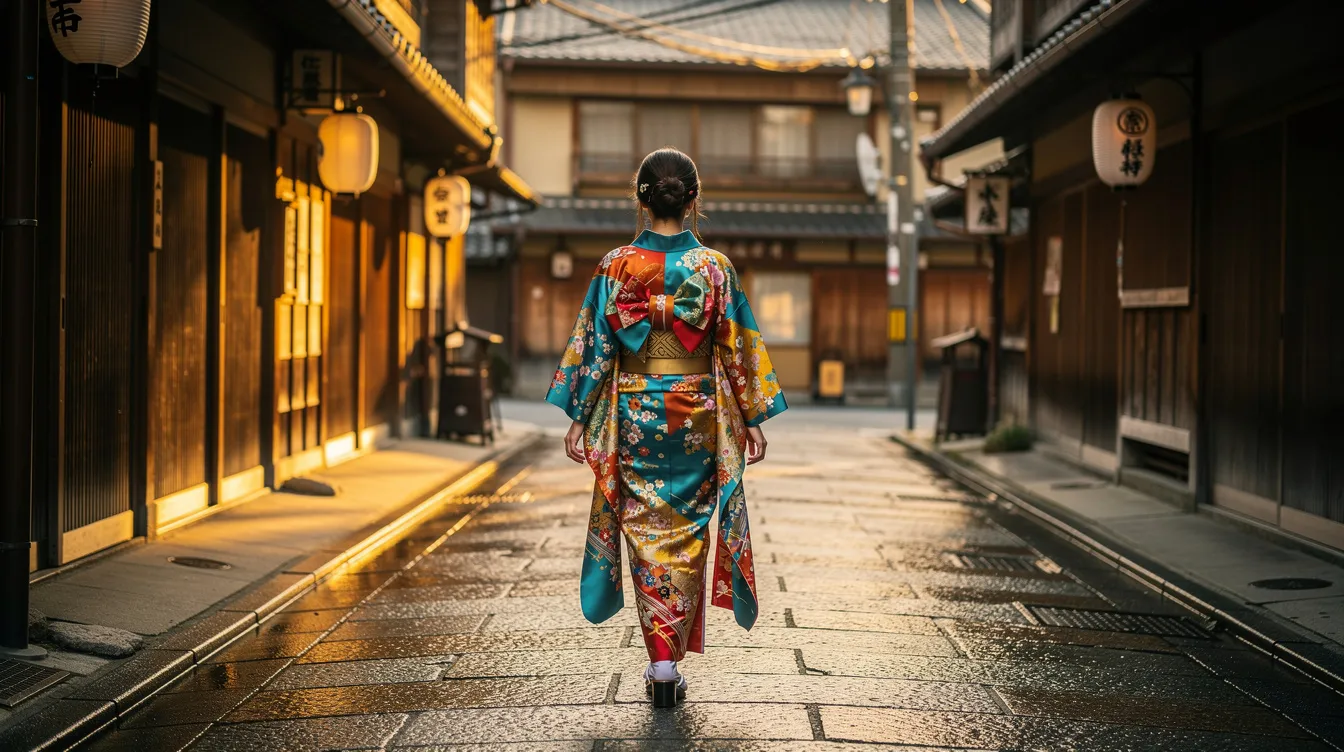
Basic Kimono Posture: Standing Tall Without Strain
Good posture is the foundation of every graceful kimono movement, and here's a reassuring fact: the obi provides structure around the torso and can increase trunk stability. A study at Bunka Gakuen University found that wearing an obi positioned near the ilium actually reduces muscle load and straightens the spine compared to going without one. So the garment itself is working with you, not against you.
To find your alignment, imagine a string pulling you gently upward from the crown of your head. Position your ears directly over your shoulders, let your shoulders relax down and away from your ears, and open your chest without arching your back. Keeping your chin slightly down creates a natural and elegant look, and engaging the core helps keep the torso straight in a kimono. Maintain a straight spine while standing in kimono-this single habit prevents the fabric from bunching and keeps the collar from shifting loose. Good posture preserves the shape of a kimono and makes dressing feel effortless rather than restrictive.
For your feet, keep toes pointing straight or slightly inward with heels close together. Balance your weight more toward the balls of the feet. The ideal kimono silhouette is a smooth, cylindrical form, and standing this way supports it. For photos, try putting one foot slightly behind the other, knees softly together, with fingers resting lightly just below the front of the obi. Avoid leaning back against walls or furniture-this protects the knot at the back and keeps your lines straight. Before leaving the rental shop, try one micro-exercise: inhale and imagine the obi gently lifting your ribcage, then exhale and let your shoulders drop. You'll feel the difference immediately.
Walking in Kimono: Small, Smooth Steps That Keep the Hem Closed
The single most important rule when walking in a kimono or yukata is this: walk slowly and take smaller steps. Wearing a kimono encourages slower, more intentional motions, and fighting that instinct only leads to a messy hem and an uncomfortable experience. Don't worry about falling behind your group-you'll look far more put-together than anyone rushing ahead.
Step length. Aim for a stride of about 10 cm when walking, roughly the length of your own foot. Large strides pull the front overlap apart, revealing your legs and the under-kimono. Take small steps to avoid revealing your legs, and you'll maintain the garment's clean shape all day. Avoid large strides to maintain kimono shape-this is especially true on windy days or uneven ground.
Gliding motion. Keep your knees together to prevent the hem from opening. Let your weight stay slightly forward and allow your feet to slide lightly along the ground rather than lifting them high as you would in sneakers. Think of it as gliding, not marching. Research on a traditional gait style called Nanba walking shows that this kind of low-rotation, compact stride actually reduces stress on the knees-so it's healthier, too.
Foot angle. Keep your toes pointed slightly inward while walking, creating a mild pigeon-toed stance. Toes facing outward can twist the hem and create an awkward, loose look. This subtle inward angle is one of the easiest ways to leave a graceful impression.
Hands and bag. Carry your bag in your left hand and use your right hand to gently hold the front overlap against your right thigh, especially when walking longer distances or in breezy areas.
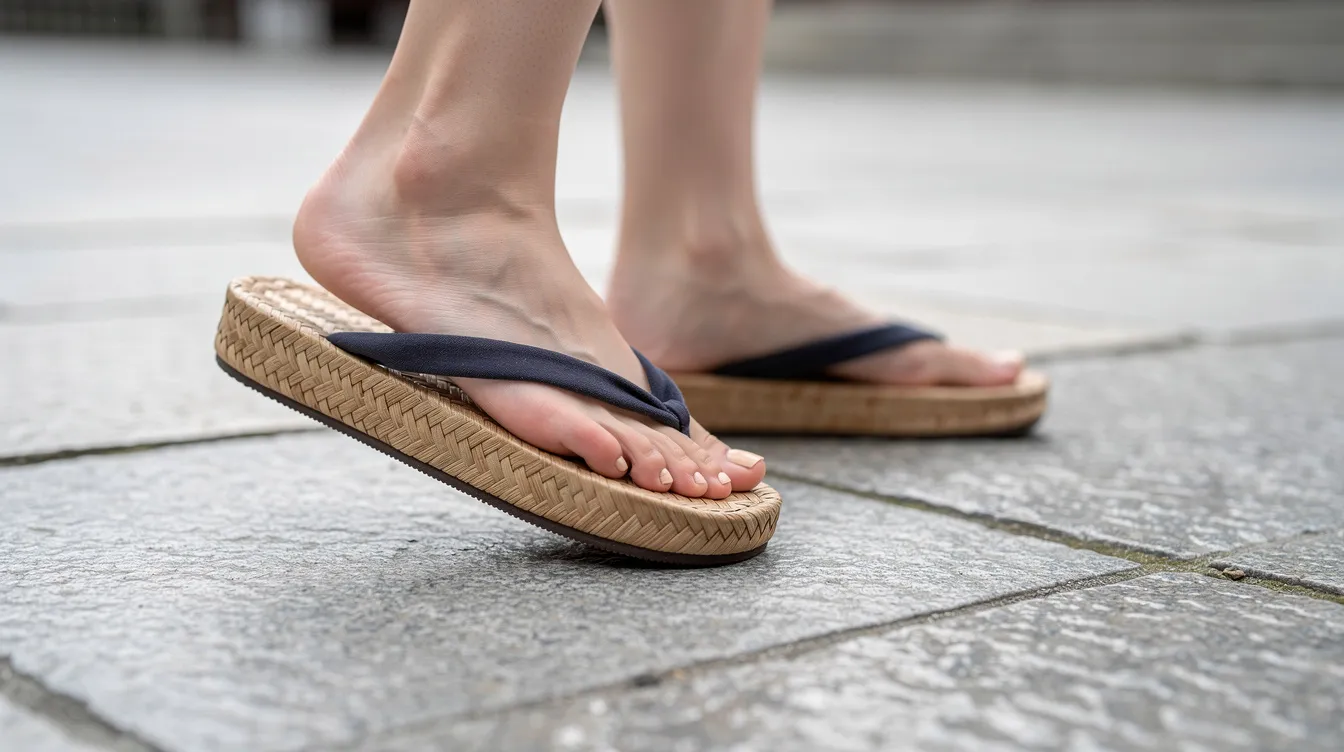
Traditional footwear. If you're wearing zōri sandals or geta, grip the thong with your toes and avoid slapping the heel down. Give yourself a few minutes of practice before a long walk. Always prioritize stability over style-especially on cobblestones, gravel at shrines, and wet pavement. Feeling familiar with your footwear makes everything else easier.
Stairs and Slopes: Keeping Your Hem Safe and Your Balance Secure
Many famous spots-like Kiyomizu Temple in Kyoto or the temple steps in Asakusa-involve hills and stairs, so this skill is essential for anyone planning to go sightseeing in a kimono.
The basic technique is to angle your body slightly when going up stairs, shift your weight to your toes for better balance on stairs, and keep your steps even shorter than usual. Hold the front layer of your kimono up while climbing stairs by using your right hand to gently lift only the front overlap just enough to clear your toes. Lift the hem gently when navigating stairs, but avoid lifting the hem too high to prevent exposure of your ankles or under-layers. If you're wearing a furisode or other long-sleeved kimono, gather the sleeves lightly in your left hand in front of your body while your right hand manages the front hem.
Up stairs. Lean slightly forward and watch each step carefully. Place the ball of one foot firmly before transferring your weight. The goal is to avoid stepping on the fabric at all costs.
Down stairs. Keep your center of gravity low and use handrails when available. Take each step deliberately-there's no rush. On rainy days, walk even more slowly, test each step, and use a larger umbrella to shield the hem and obi from splashes. Being careful on stairs is far more elegant than rushing and stumbling.
Sitting Gracefully on Chairs: Protecting Your Obi and Hem
Most modern venues-restaurants, hotels, trains-use a chair rather than floor seating, so this comes up constantly. Knowing the basics of kimono etiquette for sitting will keep you comfortable for hours.
To sit down, gather the front hem slightly with one hand, back up until the backs of your knees touch the chair, then lower your body straight down instead of falling backward. Sit shallowly on the chair to avoid flattening your obi-perch on the front half of the seat so the knot at your back stays intact. Keep your back straight and avoid leaning fully onto the backrest. A survey of 333 young women found that the top edge of the obi is the most common pressure point during long wear, so sitting shallowly actually reduces discomfort.
Once seated, smooth the kimono over your knees, keep your knees and ankles together, and angle both feet slightly to one side for a cute, neat appearance. Tuck any extra fabric under your thighs so it doesn't drag on the floor when you stand. When sitting, smooth the back of the kimono to maintain its appearance-a quick check before you settle saves you from wrinkles later.
For long meals, place a napkin over your obi while eating to protect it from spills, and keep your sleeves gathered lightly when reaching for plates or drinks. If the chair is deep, a small bag or folded shawl at your lower back can help you maintain an upright posture without strain. Wipe condensation from glasses before moving them to protect the fabric around your lap.
Sitting on the Floor: Seiza, Easy Alternatives, and Standing Up Smoothly
Sit in the seiza style for formal events like tea ceremonies, tatami-room restaurants, or gatherings at traditional inns. Seiza-formal kneeling with knees together and sitting back on the heels-became the standard during the Edo period alongside the spread of tatami floors and strict social etiquette.
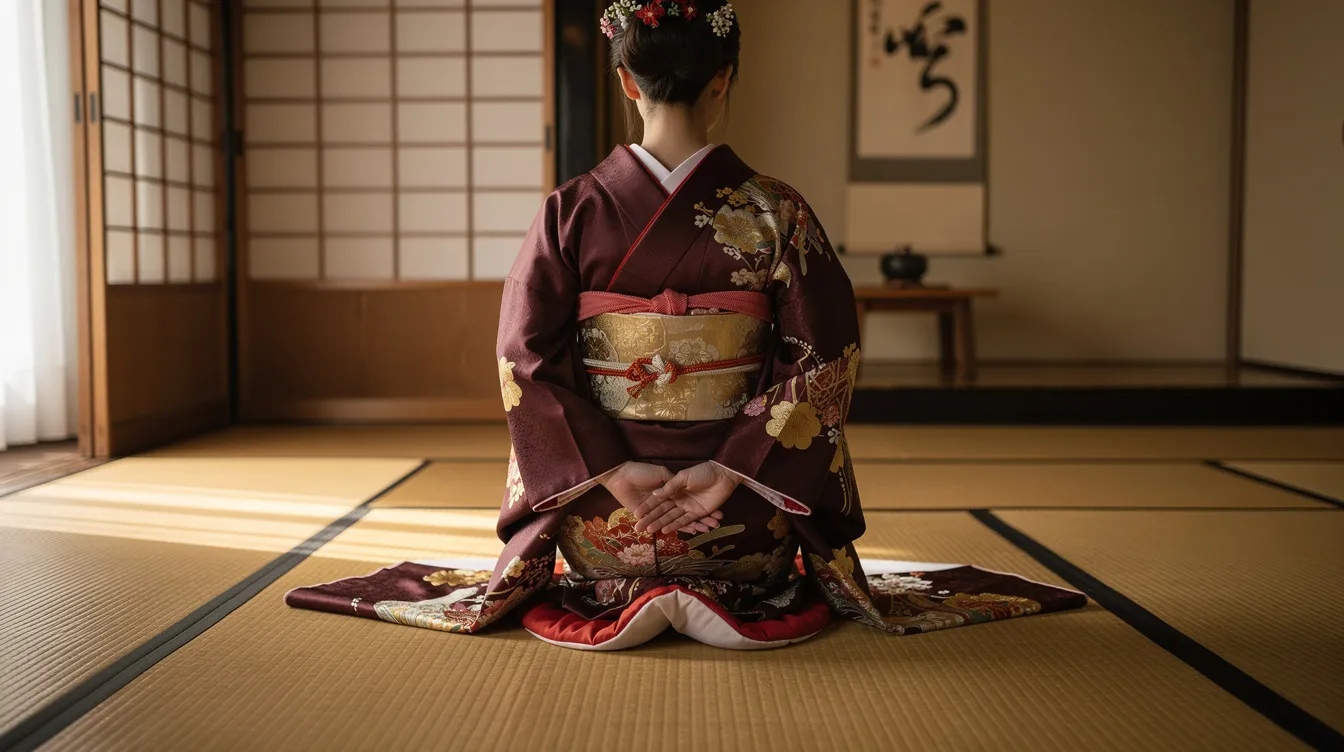
Going down. Stand with your feet together and lower yourself by bending both knees. Place one knee then the other on the tatami, keeping the front overlap closed with one hand as you descend. Sit back gently on your heels and smooth the hem behind and around your legs so the fabric lies flat. Arrange the ohashori and collar so everything sits neatly.
While seated. Maintain good posture with a straight spine, hands folded gracefully on your lap. Avoid crossing your legs or shifting restlessly. If kneeling becomes uncomfortable-and it will for most people-a modified side-sitting position called yokozuwari, with knees together and legs folded to one side, is often accepted by hosts. The key is keeping the kimono closed and modest regardless of which position you choose.
Standing up. Place one foot flat on the floor in front of you. Lean slightly forward over your knees and use your core rather than pulling on furniture to rise. Hold the front hem with one hand as you stand so the overlap doesn't swing open. Move slowly and stand fully straight before taking your first step, giving your body and garments a moment to settle.
Managing Sleeves and Arms: Reaching, Carrying, and Using Your Phone
The sleeves of a kimono can limit careless movement-and that's actually a feature, not a bug. Especially with furisode, those long, elegant sleeves are one of the most eye-catching parts of the outfit, but they need mindful management whenever you move your arms.
Raising your arms high without thinking lets the sleeves slide down and can reveal your forearms or upper arms, which looks messy and may catch on surrounding objects. Kimono movement involves keeping the arms close to the body to control the sleeves. The basic technique: hold the sleeve cuff-the tamoto-lightly with the opposite hand before you reach, keeping your elbows close to your body.
Using a phone or tapping a train card. Steady the sleeve of your reaching arm with your other hand. This one small gesture prevents the fabric from swinging into people or catching on turnstile edges.
Taking photos. When raising a camera or phone, use your left hand to hold the right sleeve cuff, then lift. This keeps the silhouette tidy and avoids an unflattering fold of fabric under your arm.
Dining. Hold your sleeve when receiving plates to prevent dipping the tamoto into food or drinks. Between courses, let both sleeves rest neatly on your lap. Lightly fold one sleeve over the other to keep them out of the way. These compact, delicate gestures aren't just about protecting the kimono-they're considered refined and attractive in traditional kimono etiquette.
Everyday Actions: Restroom, Getting Into Cars, and Small Practical Movements
Don't worry-everyday actions are completely manageable once you know the steps. The secret is simply moving a little more slowly than usual and planning each motion before you start.
Restroom. This is the one that causes the most anxiety, but it's straightforward. Lift the outermost layer of the kimono first, then the underlayers, gathering the fabric in front of your body. Tuck the bundle lightly into the obi to keep everything secure while your hands are free. When finished, reverse the process slowly-putting each layer back in order and checking that the ohashori and collar lie flat before you leave the stall. Take an extra moment to look in the mirror and adjust anything that shifted.
Car or taxi. Getting in: stand with your back to the seat opening, hold the front hem with your right hand and manage your sleeves with your left hand. Sit bottom first on the edge of the seat, then swing both legs in together. Avoid sliding deep into the seat so you don't crush the obi knot. Getting out: adjust the hem before stepping out, place both feet together outside the car, and stand up while lightly holding the front overlap to prevent it from opening. Move with deliberate, slow motions-rushing here is the fastest way to catch or tear fabric.
Picking things up. If you drop something, resist the urge to bend at the waist. Instead, gently lift the front hem slightly, step one foot back for balance, and lower yourself with your knees close together. This keeps the kimono closed and the garments aligned.
Crowded places. In busy areas, hold your sleeves close to your body with your arms and walk with awareness of the space around you. Standing in a queue, keep your elbows in and your bag close. Being mindful of your surroundings prevents snagging and keeps you looking composed.
Bringing It All Together: Relaxed Elegance and Respectful Kimono Etiquette
The core principles are simple: good posture, walk slowly with smaller steps, tidy sleeves, and protect the obi and hem during sitting and everyday actions. You don't need perfect form-just moving with awareness and respect already shows solid kimono etiquette and genuine appreciation for japanese culture. Nobody expects a first-time wearer to look like they've been dressing in kimono their whole life.
Once these movements feel familiar, start having fun with personal expression-experiment with patterns, accessories, and hairstyles that make the experience your own. If you enjoyed wearing a kimono, try practicing the posture and walking style at home in comfortable clothes before your next outing. It builds muscle memory faster than you'd expect.
Whether you're exploring stone-paved lanes during kyoto sightseeing, attending a formal ceremony, or simply posing for photos at a summer festival, feeling at ease in your body makes the entire experience more wonderful. Slow down, stay mindful, and enjoy every step.