

Sanbun-Himo: How to Use This Slim Cord to Style Your Kimono and Yukata
A single thin cord can change the entire front of a kimono or yukata outfit. The sanbun himo is that cord: narrow, flat, and built to frame a decorative brooch called an obidome right at the center of your obi. This post covers what a sanbun-himo is, how it differs from a standard obijime, and how to style it step by step.
What Is a Sanbun-Himo? (Fast Answer for Beginners)
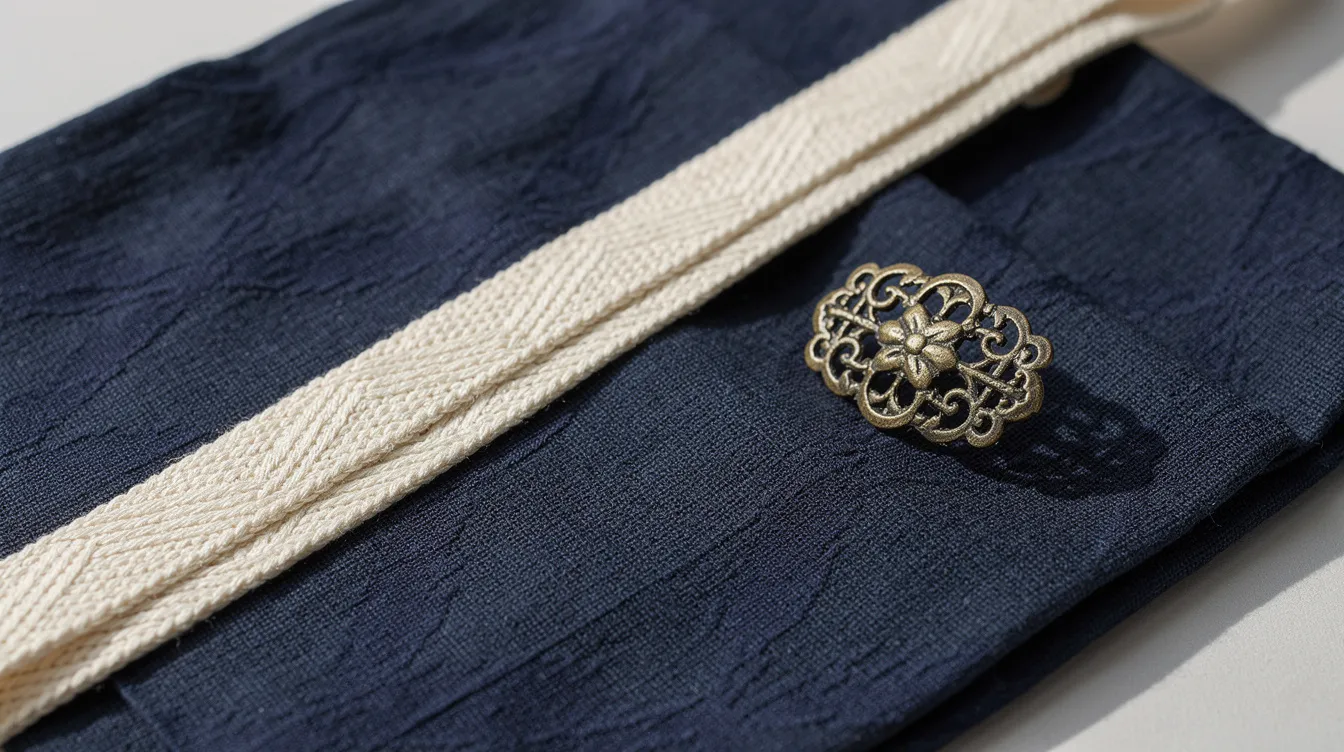
Sanbun-himo is a traditional Japanese narrow flat braided or woven cord used primarily in traditional Japanese kimono styling. It functions as a secure band for an obidome accessory, sitting horizontally across the obi belt so the brooch becomes the focal point of the outfit.
The name tells you the width. Sanbun means three bu, making the cord approximately 9 mm wide. One bu is a Japanese unit of measurement equal to about 3.03 mm, so three bu lands right at 9.1 mm, or roughly 0.9 cm (0.35 inch). Most cords run about 125 to 140 cm in length, though longer versions (called chōjaku) stretch to 150 cm for people who need extra wrapping room.
Unlike standard decorative cords that often end in ornate tassels, a sanbun-himo normally has plain, cleanly finished ends. That unobstructed surface lets the obidome slide on without catching. Materials range from cotton and rayon to silk, with a dense weave reminiscent of traditional sanada himo cord techniques.
The use of decorative cords has deep roots in Japanese culture, and sanbun-himo represents Japan's long tradition of cord-making and braiding. The weaving method traces back to sanada himo, which originated in China around the 10th century before arriving in Japan, where it found new life. The sanada clan favored sanada himo during the warring states period for military applications; Masayuki Sanada praised sanada himo for its non-slipping properties, and warriors used sanada himo to bind samurai sword handles and secure armor and harnesses in battle. Over time, the same flat-weave technique moved from the battlefield to civilian life. By the late Edo period, similar cords appeared in tea ceremony settings, where the aesthetic standards of tea masters like Sen no Rikyū shaped how people selected strings and wrapping for tea utensils. Sanada himo cord is made from 100% cotton or silk, and that material tradition carried forward into modern sanbun-himo production.
If you are about to wear a yukata to a summer festival or a kimono to a casual outing for the first time, a sanbun-himo with an obidome is one of the simplest ways to add a personal accent without learning complex knotting.
Sanbun-Himo vs Standard Obijime: Key Differences
Obijime are decorative cords worn over the obi to hold the knot in place and accent the waist area. They come in several types classified by width and shape: round (marugumi), flat (hiragumi), narrow, and wide. A standard obijime typically measures 1.2 to 1.5 cm across (about 0.5 inch or more) and features decorative tassels, called fusa, at both ends. These tassels are themselves a visible design element.
The sanbun-himo works differently. The cord is exceptionally flat and slim compared to standard waist cords. At roughly 0.9 cm, it is about 30 to 40 percent narrower than a typical flat obijime. Its ends are plain. That stripped-back design exists for one reason: to let the obidome brooch do the visual work. The slender profile of sanbun-himo allows it to hold obidome cleanly, and because the cord can easily pass through small loops or fixtures due to its design, even obidome with tight slide-through channels sit flush.
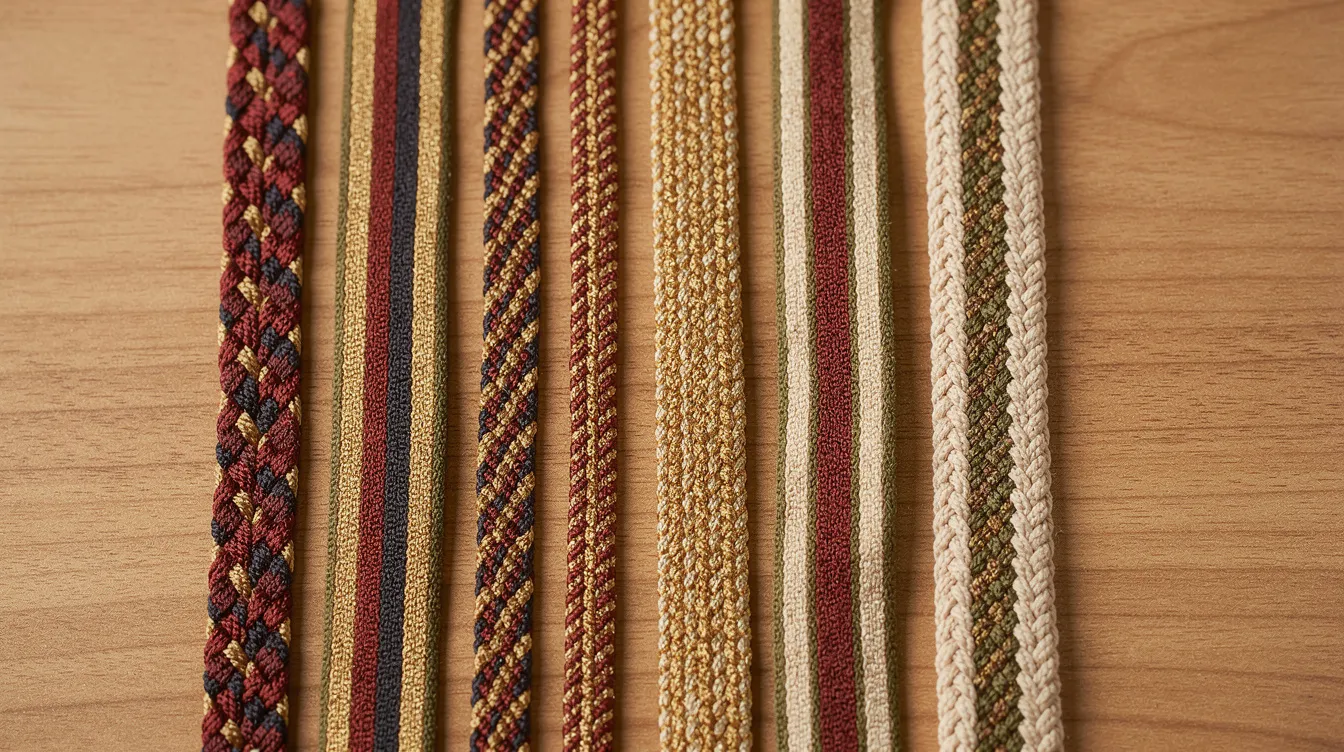
Many sanbun-himo cords are also reversible, with a different color or pattern on each side. A single cord might show pale pink on one face and deep navy on the other, giving you two coordination options in one piece.
Here is a quick way to see the difference in practice:
|
Feature |
Standard Obijime |
Sanbun-Himo |
|---|---|---|
|
Width |
~1.2–1.5 cm |
~0.9 cm |
|
Ends |
Decorative tassels (fusa) |
Plain, clean-cut |
|
Primary role |
Accent cord (itself decorative) |
Frame for an obidome brooch |
|
Typical pairing |
Formal or semi-formal kimono |
Casual kimono, yukata |
|
Reversible options |
Less common |
Common |
Picture a formal komon kimono styled with a thick, braided obijime whose tassels are tucked and arranged with care. Now picture a summer yukata with a slim sanbun-himo and a single bold obidome centerpiece, maybe a goldfish motif for a July fireworks festival. The second outfit puts all its visual weight on one small brooch instead of the cord itself. That is the design logic behind sanbun-himo.
How to Style a Sanbun-Himo with Kimono or Yukata
Sanbun-himo serves both practical and aesthetic purposes in kimono dressing, and the styling process is the same whether you are working with a yukata (typically paired with a hanhaba obi) or a casual kimono (often with a Nagoya obi). The only prerequisite is that your obi is already tied securely. No advanced dressing skills are required.
The sanbun-himo with obidome should sit horizontally across the center front of the obi, roughly at your waist or just above the navel. Here is how to put it on:
Start by sliding the obidome brooch onto the sanbun-himo cord from one end before putting the cord on your body. Center the obidome so you have equal length of cord on both sides. Bring the cord around the front of the obi and position the obidome where you want the focal point, typically dead center. Carry the two ends of the cord around your sides to the back. Cross them behind your body and tie a firm, flat square knot (also called a reef knot) behind the obi layers. Gently tuck the knot and any extra cord length upward or downward into the folds of the obi so nothing shows from the outside.
When you are finished, only the sleek cord and the obidome should be visible from the front. The back should look smooth, with no bulging knot.
A few practical tips that make the process easier:
-
Keep the cord flat against the obi at all times. If it twists, pause and smooth it before tying.
-
Adjust tension so the cord is snug but does not press uncomfortably into your torso. New sanbun-himo can feel hard and stiff; silk versions soften with time, while cotton stays firmer.
-
Check alignment in a mirror. The obidome should sit level and horizontal.
-
For more formal looks, you can layer a sanbun-himo with obidome slightly above a standard obijime. This way, both the cord and the main obijime contribute to the outfit without competing.
Sanbun-himo can be paired with casual garments like tsumugi or yukata, and the same method applies to all of them.
Styling Ideas and Benefits of Using a Sanbun-Himo
One cord, many brooches. That is the simplest way to think about what sanbun-himo offers. Because the cord itself is visually quiet, the beauty of the outfit shifts to whatever obidome you choose. A single ivory sanbun-himo can work with a cherry blossom obidome in spring, a glass goldfish in summer, a maple leaf in autumn, and a snowflake in winter. People who collect seasonal obidome pieces find that they only need two or three cords to cover an entire year of occasions.
Crafted sanbun-himo often features intricate geometric patterns and seasonal colors, but even a solid-color cord creates a clean frame for ornate or large obidome designs, from delicate silver pieces to colorful ceramic brooches. The flat weave, similar to sanada himo cord, helps the sanbun-himo stay in place and resist slipping during walking, dancing, or sitting at events.
Reversibility adds another layer of versatility. Flip a cord from its pale pink side to its deep navy side and you have a different look without buying anything new. Some artisan-made cords from places like Iga-Ueno and Kyoto offer two-tone weaving patterns such as sasanami-gumi (small wave) on one face and a contrasting solid on the other.
The beginner-friendly factor is real. The only knot you need is a basic square knot at the back. No decorative front knots, no advanced obi-musubi techniques. If you can tie a shoelace, you can tie a sanbun-himo.
Two outfit ideas to try:
-
Summer festival: A cotton yukata with stripes, a red hanhaba obi, a white sanbun-himo, and a gold-tone obidome. Clean, festive, and easy to put together for fireworks festivals in July or August.
-
Autumn outing: A casual komon kimono in warm earth tones, a brown obi, a moss-green sanbun-himo, and a maple leaf obidome for an October walk through a temple garden.
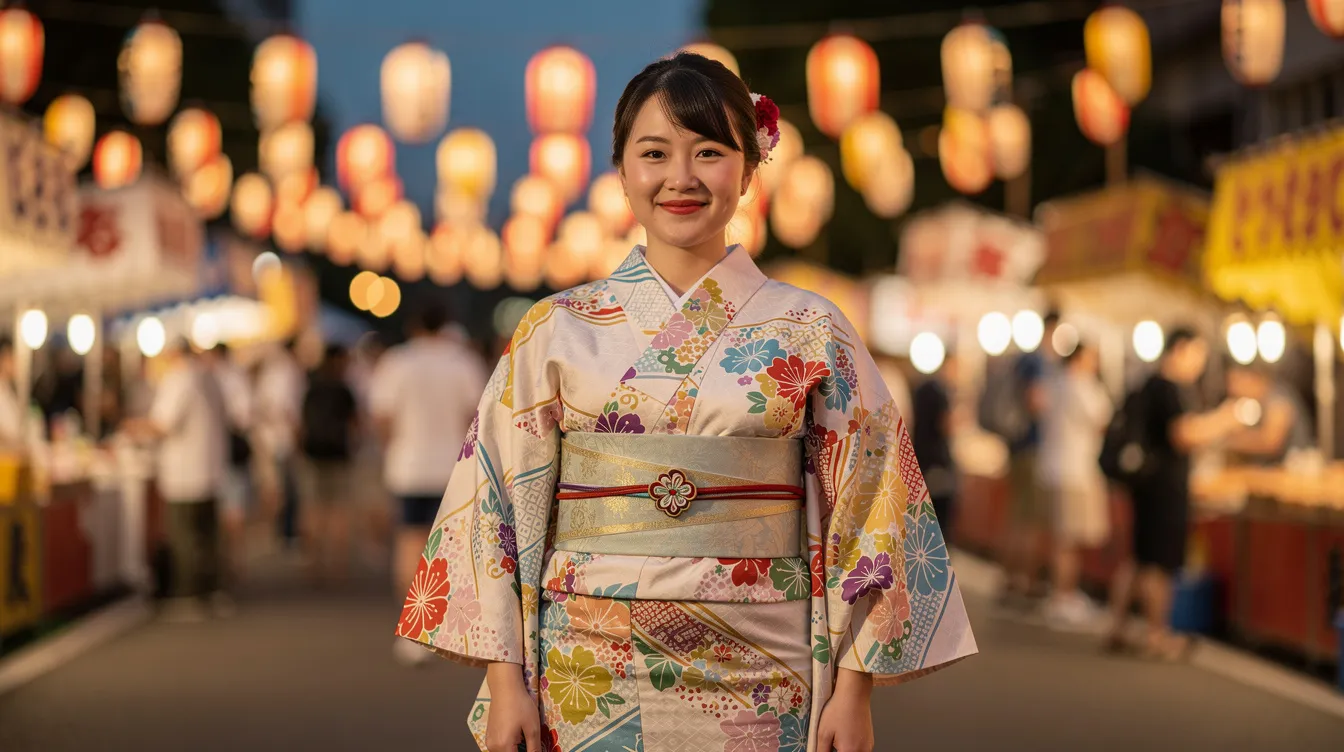
Demand for sanbun-himo has been growing among younger people in Japan who want to personalize festival outfits without investing in a full set of formal accessories. The trend blurs old formality lines, and that is part of the appeal. Sanbun-himo gives you a way to engage with traditional Japanese culture on your own terms.
Care Tips and How to Choose Your First Sanbun-Himo
Proper care extends the life of both the cord and the obidome, especially after outdoor festivals where sweat and humidity are unavoidable.
Choosing your first cord: Start with a neutral or solid-color sanbun-himo in ivory, black, or navy. These colors coordinate with most obi and yukata pattern combinations, so you will not need to buy a new cord every time you change your outfit. High-quality sanbun-himo are often made from 100% silk, and you can find them from specialty retailers or kimono shops. Look for cords that lie flat and feel smooth but sturdy in the hand; a tightly woven cord similar in feel to high-quality sanada himo cord will resist fraying and hold its shape over time.
For obidome, start with one or two versatile designs. A small floral motif and a geometric piece will cover most casual occasions before you branch into seasonal or themed brooches.
Basic care instructions:
-
After wearing, gently smooth the cord, let any sweat or moisture air-dry fully, and store it loosely coiled. Do not bunch or fold it tightly, as creases can be hard to remove from flat-woven cords.
-
Avoid machine washing. If needed, spot-clean gently with a soft, slightly damp cloth and dry flat away from direct sunlight. Silk cords are especially sensitive to water and heat.
-
Store metal or lacquer obidome separately in small pouches to prevent scratches. Slide them onto the sanbun-himo only when you are getting dressed.
With one sanbun-himo and a favorite obidome, you can transform a simple yukata or kimono into a personal outfit that reflects your own taste. Pick a cord, find a brooch that catches your eye, and try it at your next outing. The school of learning here is simple: put it on, adjust, and go.