
Introduction: What Is a Men's Yukata?
If you've ever wanted to wear yukata but felt unsure about where to start, you're in the right place. A men's yukata is a lightweight, unlined cotton robe worn during summer across Japan. Originally known as a yukatabira, it was first used by aristocrats after steam baths during the Heian period. The garment became popular during the Edo period and evolved from a simple bathing robe into a cornerstone of Japanese summer fashion that people of all ages enjoy today.
Because yukata is considered more casual than a silk kimono, it's the perfect entry point for guys who want to connect with Japanese tradition without the complexity of formal dressing. The fabric is highly absorbent and breathable, making it ideal for hot, humid weather. Yukata are associated with summer seasonal events in Japan, and in modern Japan they're worn at festivals and traditional events by both japanese people and international visitors alike. Whether you picture yourself strolling through an onsen town like Kinosaki Onsen, attending a fireworks display, or simply relaxing at home, the yukata fits every one of those scenes.
This guide is written by ADN Kimono, a Japanese kimono retailer, specifically for first-time male buyers. We'll walk you through everything from sizing to tying your obi, so you can step out with confidence. As you read, feel free to explore our men's yukata collection to see the styles we reference throughout.
Men's Yukata vs Women's Yukata: Key Differences
Men's and women's yukata share the same basic T-shaped structure, but the similarities mostly end there. Here's what sets them apart:
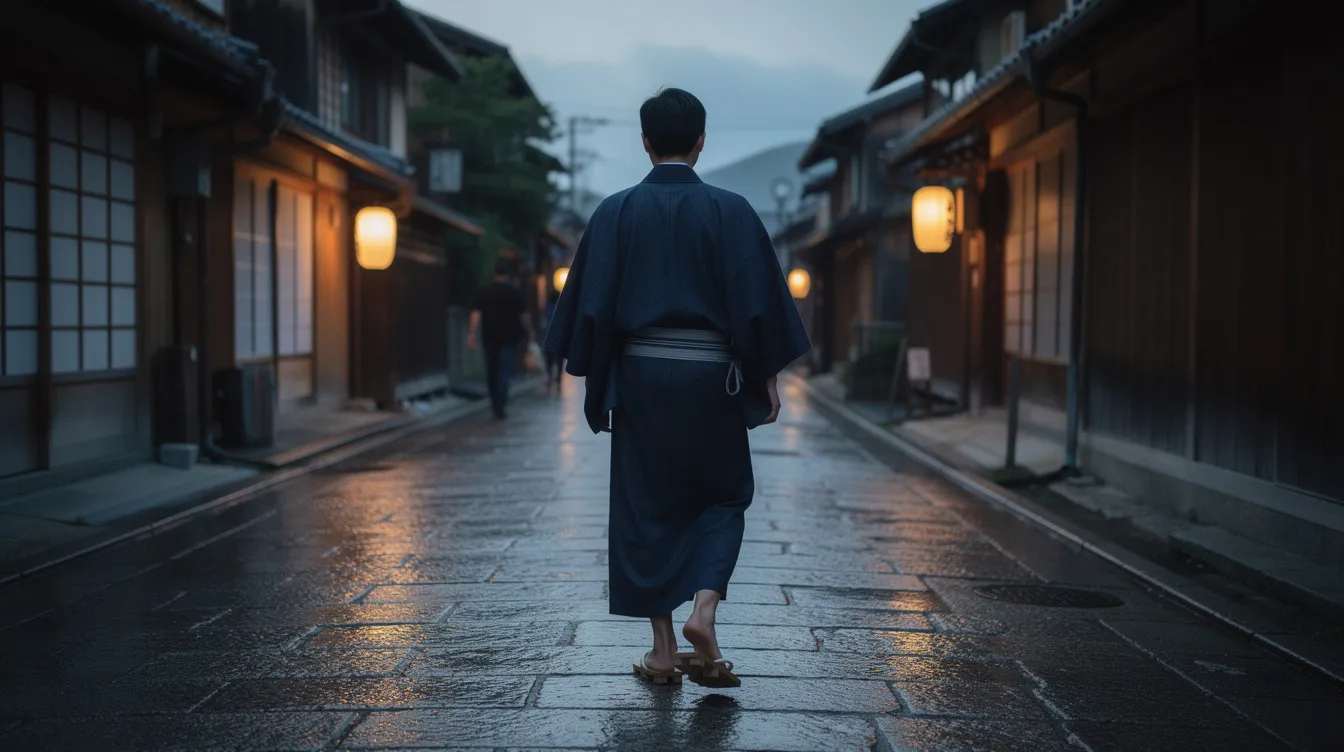
Men's yukata typically use monotone or subdued colors - navy, charcoal, black, deep indigo, and muted earth tones. Women's styles lean toward brighter pastels, bold florals, and seasonal imagery. When it comes to patterns, men's designs favor stripes, plaids, geometric motifs, and abstract symbols, while ladies often choose large floral prints and decorative seasonal artwork.
The fit differs too. A men's yukata hangs straight from the shoulders to around the ankle with little waist shaping. Women adjust length by making an ohashori fold at the waist, creating a bloused silhouette. Men's sleeves are shorter, more closed near the body, and more practical for walking and eating at festivals. Men's yukata are usually made from cotton or linen, and contemporary yukata fabrics are easier to wash and maintain than their historical counterparts. Men's yukata typically have simple patterns and easy-to-tie obi, which is a major advantage for beginners.
The obi belt is another clear difference. Men usually wear a narrower, firmer kaku-obi in solid or simple woven patterns, while women use wider, decorative obi tied in elaborate bows. At ADN Kimono, we curate men's yukata specifically designed with these masculine colors and patterns, so you don't have to guess.
How to Choose the Right Size for a Men's Yukata
Sizing a men's yukata is easier than most people think. Three reference measurements will get you there: your height (body length), shoulder width, and arm length.
Body length is the most important. When worn, the hem should sit just above your ankles. Large size yukata fit heights of 5'9" to 5'11" (roughly 176–180 cm). If you're shorter, a standard M is usually fine for around 165–175 cm. Taller or broader men should look at LL, 3L, or even 4L–5L sizes.
Shoulder width matters for comfort. Measure point to point across your back and choose a yukata where the shoulder seam falls at or just beyond your natural shoulder. If the seam sits too far in, the chest and arms will feel tight.
Sleeve length for men should reach roughly to the wrist bone with your arms relaxed - long enough for easy movement without covering your hands. Most men's yukata sleeves run around 49–52 cm.
Japanese size labels (M, L, LL, 3L–5L) map loosely to Western sizing. If you're between sizes or have broader shoulders, we recommend sizing up. ADN Kimono provides exact measurements on each product page, and our custom kimono for men options let you adjust length, sleeve width, and body width for a perfect fit. You can also message us with your height, chest, and shoulder width for personalized advice.
Step‑by‑Step: How to Wear a Men's Yukata and Obi Belt
Dressing in a yukata is simple once you know the sequence. Here's how to do it right, even if it's your very first time.
1. Prepare your underlayer. Wear a light T-shirt or thin undergarment underneath - nothing bulky. Check out our guide on what to wear under a yukata for more detail. Slip your arms into the sleeves and hold both front panels evenly, aligning the center back seam with your spine.
2. Cross the panels correctly. This is the single most important rule: wrap the right side over your left hip first, then fold the left panel on top. Left always finishes on top for living people. Do not cross the right side above the left - that arrangement is reserved exclusively for funerals.
3. Adjust the length. Pull the hem so it sits just above your ankles. If there's excess fabric, tuck and pinch it at the waist before securing. If the yukata is too short, you'll want a larger size.
4. Secure with a koshi-himo (optional). Beginners can tie a thin waist cord around the hips to hold everything in place before adding the obi. This extra step makes the whole process more forgiving.
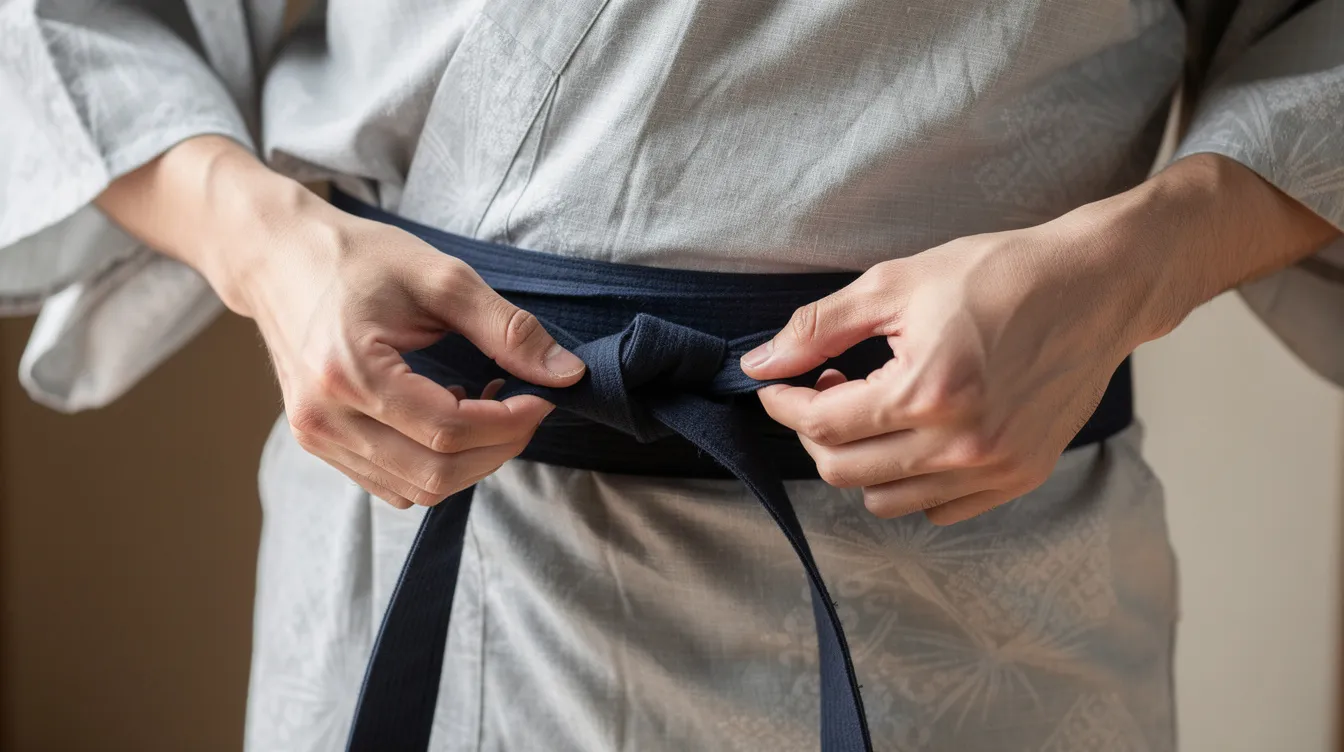
5. Tie the obi belt. Men position the obi low on the hips, not at the natural waist. Wrap the sash around your body two to three times, keeping tension even. Grasp both ends and tie a simple kai-no-kuchi knot - a flat, square knot that should sit slightly off-center at the back or on the right hip. The knot should feel firm enough to hold but still let you breathe comfortably.
6. Final check. The collar should form a clean V at the neck across your chest. Adjust the shoulders to prevent gaping. For cooler evenings, you can add a light haori jacket over the yukata while keeping the look minimalist.
Traditionally, yukata are worn with wooden sandals called geta - slip them on, and you're complete.
Men's Yukata Styling Tips for Different Occasions
A men's yukata works across multiple settings - the key is adjusting your color and accessory choices to match the occasion.
Summer festivals and fireworks. Men wear yukata to summer festivals and fireworks displays across Japan, making it one of the most popular warm-weather looks. Choose a deep navy or indigo yukata with bold stripes or geometric patterns, paired with black or dark brown geta and a solid kaku-obi. Darker colors look more formal for night festivals, which is fine for evening strolling through crowded streets.
Casual and at-home wear. For relaxed daily dressing, opt for softer cotton in muted colors - think light gray, washed indigo, or slate. A jinbei set (two-piece top and shorts) is a comfortable alternative for ultra-casual evenings at home. If you want something in between, a plain yukata with a textured or slightly contrasting obi adds interest without effort.
Onsen trips and ryokan stays. Choose easy-care cotton yukata that dry quickly, ideal for walking between baths or around towns. Lighter blues and grays feel cooler during daytime, while charcoal tones suit evening wear.
A good rule for balancing patterns: if your yukata has a busy check or abstract motif, keep the obi belt and sandals simple and solid. If the yukata is plain, a spread of texture in the obi or a contrasting geta strap adds visual interest. Browse our men's yukata sets that combine yukata, obi, and geta so you don't worry about mismatching items.
Essential Men's Yukata Accessories (and How They Differ from Women's)
Accessories complete the look, and for men they're generally more understated than women's versions.
|
Accessory |
Men's Version |
Women's Version |
|---|---|---|
|
Obi |
Wide, decorative obi with elaborate bows |
|
|
Footwear |
Flat, rectangular geta with dark straps; setta for a more formal option |
Elevated geta with colorful, ornate straps |
|
Bag |
Small kinchaku or shingen bag |
Larger, more decorative pouches |
|
Fan |
Simple sensu folding fan |
Decorative or patterned sensu |
Men's geta sandals produce that characteristic rhythmic clack on stone streets - a sound you'll hear everywhere in onsen towns. Setta sandals are a slightly more formal, cushioned alternative with leather soles, and ADN Kimono offers caramel brown setta sets that pair well with navy or gray yukata.
Jinbei deserve a mention as an alternative: these two-piece summer sets (top and shorts or pants) are popular for lounging or casual summer events. They're not a robe like a yukata, but many guys own both.
Small practical items round out the kit: a kinchaku bag for your phone and wallet, haori himo cords if you're wearing a hand jacket, and a sensu folding fan for hot nights. ADN Kimono sells coordinated men's yukata sets - 3-piece and 5-piece combinations - that remove the guesswork for first-time buyers.
Your Yukata Experience in Onsen Towns Like Kinosaki Onsen
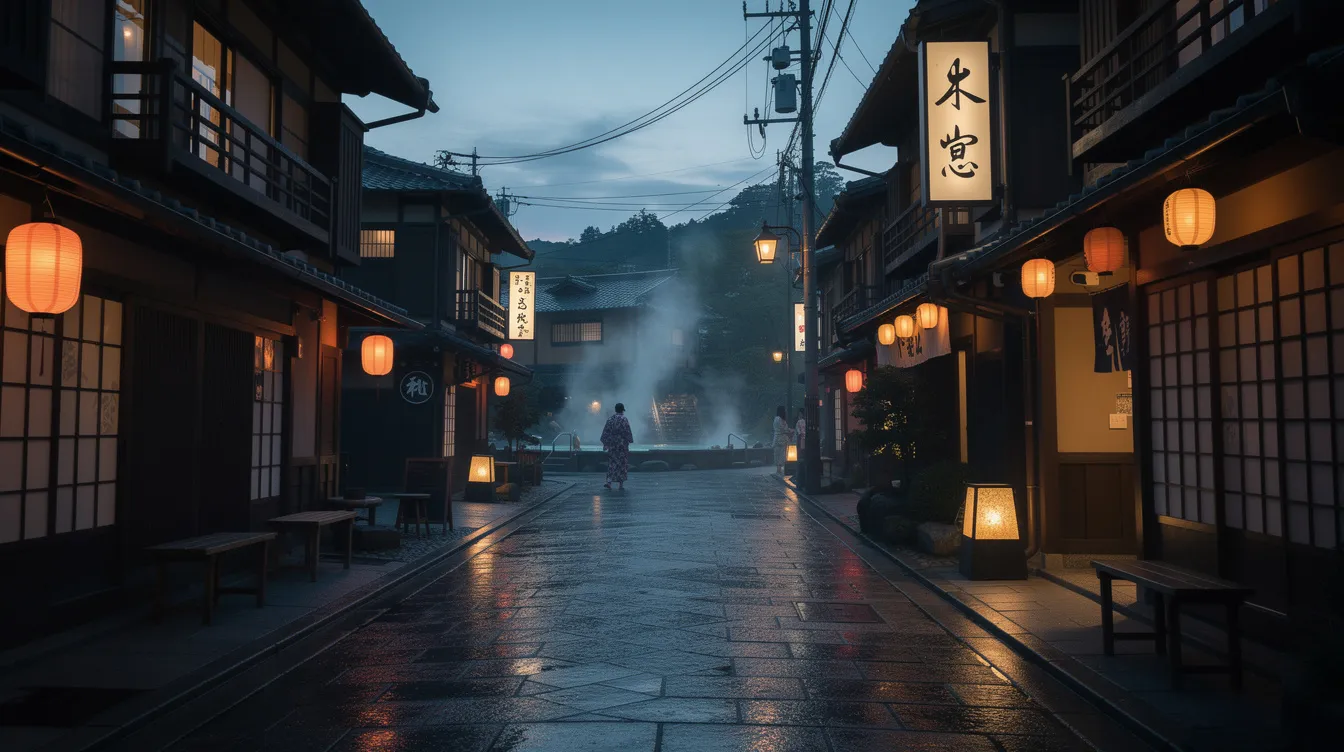
Kinosaki Onsen is ideal for wearing yukata. The town has seven public baths connected by lantern-lit streets, and visitors often wear yukata while exploring Kinosaki Onsen - hopping from bath to bath in wooden geta is practically the whole point of a visit.
Most ryokan provide yukata for guests during their stay, and Kinosaki Onsen offers free yukata at ryokan accommodations. You'll see people of all ages in yukata, making the yukata experience feel natural even if you've never worn one before. Yukata rentals are available in many tourist destinations, and yukata rental shops are common - for example, IROHA Yukata Shop rents yukata for men, women, and children. Yukata were originally designed for use in hot springs, so the whole setting just fits.
That said, owning your own men's yukata gives you a better fit, more masculine color choices, and lets you enjoy the same style at home, at local festivals abroad, or on your next trip. Keep your yukata neatly closed when walking outside, tie the obi securely before leaving your room, and wear a light layer underneath for comfort. If you're planning a trip to Kinosaki Onsen or similar towns, we recommend you purchase a personal yukata in advance so you can practice tying it and stay confident upon arrival.
ADN Kimono's Men's Yukata Collection and Next Steps
Here's what we've covered: the key differences between men's and women's yukata, how to find the right size using three simple measurements, a step-by-step guide to dressing and tying your obi, and the essential accessories that complete the look.
At ADN Kimono, our men's yukata range includes navy cotton yukata sets in both 3-piece (yukata, obi, geta) and 5-piece combinations with a bag and additional accessories. Custom-fit sizing is available for men who need precise measurements. Every product page lists shoulder width, body length, and sleeve length so you can match your numbers easily. While yukata prices range from 1,000 to 10,000 yen at some souvenir shops selling cheap yukata in tourist spots, investing in a quality set from a dedicated retailer ensures better fabric, proper fit, and items that last across many summers.
We're happy to answer questions about fit, styling for specific occasions, or coordinating accessories - just send us a message with your measurements.
Ready to get started? Browse our men's yukata collection and find the set that fits your style, or explore our custom kimono for men for a tailored fit. For more tips on Japanese traditional wear, visit the ADN Kimono blog.