

What To Wear Under a Yukata: Expert Guide from ADN Kimono
As a stylist at ADN Kimono, I get asked about what to wear under a yukata more than almost anything else. Here is everything you need to know to stay comfortable, modest, and elegant from your first summer festival to your next ryokan stay.
Quick Answer: What Should You Wear Under a Yukata?
Wearing a yukata properly starts underneath. Standard underwear with a lightweight base layer helps create a flattering silhouette, so skip bulky wired bras and thick seams - they ruin the flat, cylindrical shape and make the collar and obi sit awkwardly. . [To ensure your outer layers sit just as perfectly, make sure to consult our Yukata Sizing Guide to find your ideal measurements.] Wear breathable underwear to stay cool in yukata and keep things simple.
Best picks for women:
- Seamless nude underwear (beige or skin-tone, never white)
- A non-wired sports bra or kimono bra to gently de-emphasize the chest
- Thin bike shorts or cooling safety pants for security underneath
- A hadajuban (traditional cotton undershirt) if you have one
For white or pastel summer yukata, choose beige or nude undergarments to avoid visibility through the fabric. These tips work whether you are exploring an onsen town, walking the streets in wooden sandals at a matsuri, or using a yukata as sleepwear at home.
Why Regular Bras and Underwear Don't Work Well Under a Yukata
A smooth silhouette is important for maintaining the sleek lines of traditional attire. Modern wired bras and thick underwear create bumps and an overly curvy shape that fights the flat front needed for a japanese kimono or yukata. Undergarments create a smooth silhouette for the traditional kimono shape only when they are thin and seamless.
The body should look relatively straight from bust to hips so the obi belt sits level and the left side overlaps cleanly over the right side. Standard bras with underwire and lace create ridges under thin cotton fabric, especially visible in bright daylight. Thick elastic waistbands tend to show through or create dents around the right hip and bottom when you sit or walk. Metal hardware can dig into skin when a snug sash is tied over them, increasing sweat and chafing in summer heat.
Traditional Innerwear: Hada-juban and Susoyoke
A hadajuban is a common undergarment for yukata - it is the gold-standard base layer in Japan. Traditional undergarments enhance comfort and protect the outer garment from oils and moisture. A hanjuban is a top that combines a hadajuban with a kimono-style collar, useful when you want that elegant neckline detail.
- Hada-juban: A lightweight cotton top with deep V-neck that sits invisibly under the collar while absorbing sweat. Traditional undergarments absorb sweat and prevent yukata from sticking. Lightweight cotton layers are recommended for comfort and garment protection.
- Susoyoke: A wrap-around petticoat worn under a yukata that smooths the hips and thighs. The susoyoke prevents the yukata from clinging to the skin in humidity, helping create a clean line from waist to hem.
Many modern hada-juban sets are machine-washable and available in breathable fabrics suitable for Japanese summers in 2026. ADN Kimono generally recommends a two-piece style over a full-length nagajuban for easy bathroom use and for beginners putting on a yukata themselves.
Modern Western Hacks: What To Wear If You Don't Own Yukata Undergarments
You do not need a full traditional wardrobe to start - you can fill your base layer from clothes you likely already own. A kimono bra can help de-emphasize the bust, but alternatively, a non-wired sports bra or "sleep bra" with a soft underband works fine as a substitute. Deep V-neck tops keep undergarments hidden beneath the yukata's collar.
- Choose low-profile bras that gently flatten instead of lifting - avoid molded cups, thick padding, or racerback bulk
- Pick seamless mid-rise panties or boyshorts in a nude shade close to your skin tone
- Lightweight shorts or cotton underwear can help prevent chafing under a yukata during long walks
- Wearing a slip can minimize lines under the yukata if no hada-juban is available
Emergency outfit: nude seamless underwear, soft sports bra, thin bike shorts, and a tank top or camisole if needed.
Transparency, Color Choice, and Light Summer Yukatas
Many people discover too late that a white or pastel yukata becomes semi-transparent in sunlight or under indoor downlights. A modesty layer prevents sheer fabric issues in light-colored yukatas, so plan ahead. Wearing naked or beige undergarments prevents visibility through white yukatas - light-colored or nude undergarments are preferred under thin yukata fabrics.
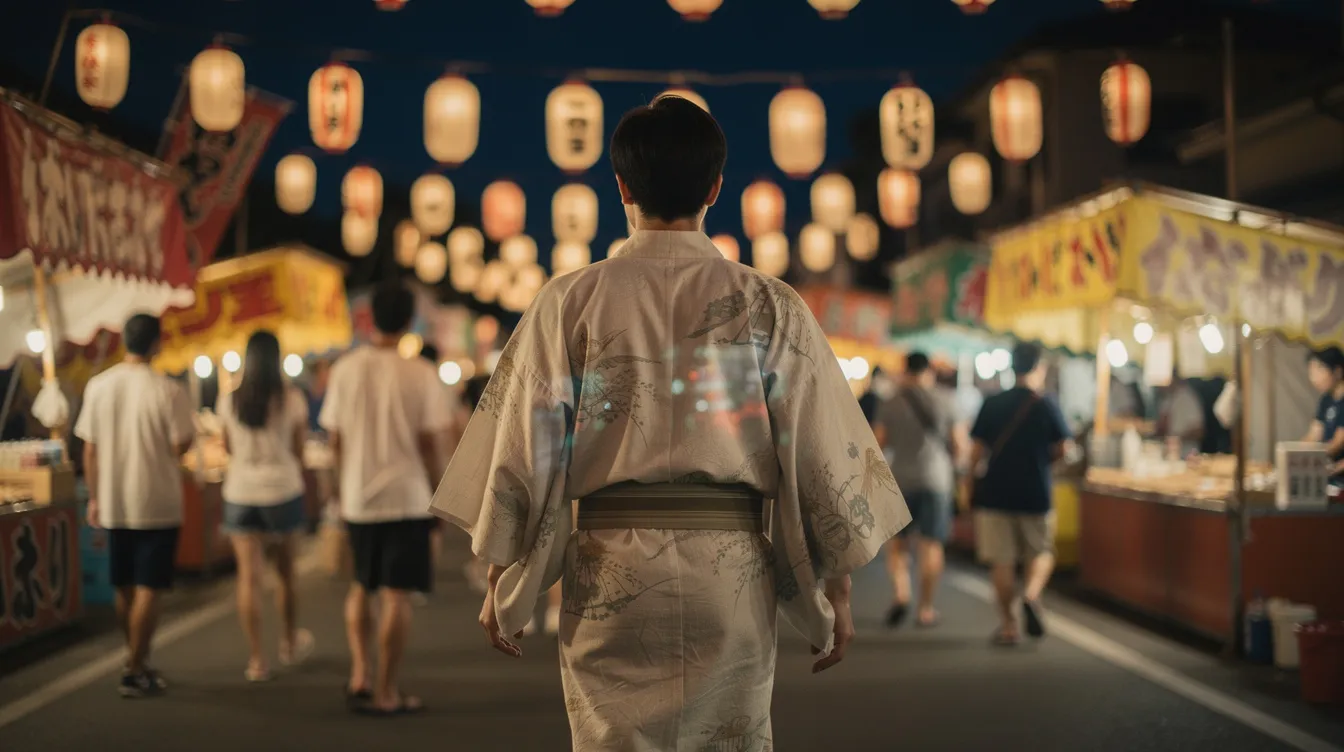
Printed patterns hide innerwear better than solids, but good base layers still matter. At festival nights, lantern lighting from below can make transparent areas more noticeable, so add a thin slip underneath if the fabric is especially sheer. Note that ADN Kimono's lightweight summer yukatas are designed with this in mind, but choosing undergarments that match your skin tone is still essential for peace of mind.
Heat, Sweat, and Chafing: Staying Comfortable in Summer
Japanese summers regularly exceed 28–30°C with high humidity, and smart innerwear makes the difference between suffering and fun. Breathable materials like cotton are ideal for yukata undergarments - choose moisture-wicking fabrics that pull sweat away rather than heavy polyester. Use a damp cloth to treat yukata stains immediately if food or drink splashes during a festival.
- Anti-chafing: thin bike shorts, body powder, or anti-chafing sticks along inner thighs
- A small towel folded at the low back serves double duty: shaping the waist for a cleaner obi line and absorbing sweat where the sash sits tightest
- Tuck a handkerchief between the yukata and obi to prevent slipping
- Bring adhesive bandages to prevent geta strap chafing on your feet
Dressing Steps: How to Layer Innerwear Before Tying Your Yukata
The layering order is: underwear and bra first, then bike shorts or susoyoke, then hada-juban or camisole, then any padding, then the yukata, obi, and geta wooden sandals last. Getting dressed in the right sequence keeps everything smooth. [Once your base layer is set, follow our step-by-step masterclass on how to wear a kimono with effortless authenticity.]
- Start with underwear and bra; add shorts or susoyoke for the lower body
- Place a small towel pad at the back waist if needed to fill the curve
- Slip arms into the sleeves, align the center back seam, then wrap the right side to the body first and the left side over the right so the left side is on top - avoid crossing the right side above the left, as that is reserved for the dead in Japan
- Adjust the length so the hem falls just above your ankles, then fold and tuck the excess at the waist
- Tie the sash at your waist for women, securing everything with a knot; use safety pins to secure sagging yukata hems if needed
- Smooth the front with your left hand, checking that nothing bulky sits under the obi; tug gently to remove wrinkles
- Add accessories - geta, a small bag - then walk a few steps in the mirror to check for visible lines
What Men Should Wear Under a Yukata
Men also benefit from intentional innerwear. The silhouette is straighter, but the obi sits lower on the hips, and a clean line still matters. Wear breathable underwear under your yukata for comfort regardless of the setting.
- A lightweight V-neck undershirt or tank that does not show at the collar - or skip it on very hot nights
- Thin boxer briefs or trunks in nude or dark tones; avoid bulky logo waistbands
- A folded hand towel at the lower back helps the men's obi stay in place and absorbs sweat
- Men should tie the sash at their hips, not the waist
- The same left side over right rule applies when you cross and wrap the front, and smooth underlayers help the front stay neat while you sit
Onsen, Ryokan, and At-Home Yukata: Adjusting What You Wear Underneath
The right innerwear shifts depending on context. At a hotel or ryokan after bathing, guests tend to wear minimal quick-dry innerwear. At a crowded festival, you want full coverage for security.
- Onsen and ryokan: Minimal layers - nude shorts and a simple sports bra. You will change in your room frequently, so keep it easy. ADN Kimono's tsuke obi (pre-tied obi) works especially well in these settings where you immerse yourself in the experience without fussing with a complicated knot.
- Outdoor festivals: Full layers - bra, underwear, shorts or susoyoke, and a camisole - for security in wind and movement on the streets. You'll walk past food stalls, pull friends for photos, and stay out late.
- At-home: People in Japan often wear a yukata loosely over underwear or a pair of shorts and a tank top as casual loungewear. Comfort over silhouette - that is perfectly fine.
For footwear in any context, pair breathable tabi socks with geta to keep feet comfortable across long distances. You can purchase these at most kimono shops worldwide.
Common Mistakes When Choosing What to Wear Under a Yukata
Most problems come down to visible bra lines, bright underwear showing through, overheating, and a collar that will not sit properly. Here is what to avoid:
- Push-up or padded wired bra that creates a pronounced bust and gaps in the front overlap
- White or black underwear under a thin, light-colored yukata - visible in photos and sunlight
- Skipping shorts or safety pants - leads to thigh chafing during long summer walks through town
- Thick shapewear that rides up and creates extra bulk under the obi area; it cannot be secured flat
With a few smart swaps, you can stop the worry and focus on enjoying the world around you - the sound of your wooden sandals on the pavement, the evening breeze, and the atmosphere of a Japanese summer.
FAQ: Underwear, Bras, and Going Braless Under a Yukata
ADN's stylists answer the two questions we hear most from people new to wearing a yukata in any place around the world.
Can I wear a regular bra under a yukata?
Technically yes, but it is not ideal. Standard wired bras create visible lines, a bumpy silhouette, and discomfort when the obi is tied. Instead, choose a non-wired sports bra or kimono bra that gently flattens the chest. If you must wear a regular bra, pick one that is lightly lined, smooth, non-lace, and close to your skin tone. Slightly loosen the straps to reduce ridges.
Can I go completely underwear-free?
For private settings at home, you can - historically, people wore yukata directly after bathing with nothing underneath. But for public events, festivals, and ryokan dining rooms, it is strongly discouraged for hygiene, transparency, and accidental exposure reasons. Windy conditions and open fronts make it risky. Wearing at least seamless underwear and thin shorts is safer and more comfortable. Leave a comment if you have more questions.
Ready to get dressed for summer? Explore ADN Kimono's lightweight summer yukatas and hassle-free tsuke obi sets on our website - designed to sit smoothly over both traditional and modern innerwear so you can step out with confidence on any page of your Japan adventure.