
Yukata Sizing Guide: How to Choose the Perfect Fit
If you have ever worried that traditional japanese clothes will be too small, too short, or difficult to wear, you are not alone. This yukata sizing guide from AnotherDateNight (ADN) Kimono will help you find the right size with confidence, whether you are buying your first yukata, a plus size yukata, or a custom piece.
You can explore our detail style tips in [Yukata: Your Ultimate Guide to Stylish Summer Festival Dressing in Japan].
Quick Start: How to Size Your Yukata in 2 Minutes
At AnotherDateNight (ADN) Kimono, our simplest answer is: choose by height and hip size first. Standard yukata sizing relies primarily on height and hip circumference instead of traditional dress sizes.
- Measure your height in cm.
- Measure your hips at the widest place.
- Compare both to the product size chart.
Example: if you are 165 cm tall with 110 cm hips, a one size standard yukata may feel small; choose tall, plus size, or custom. Standard yukata often suit 150–170 cm and hips up to around 100–105 cm, though regular size yukata kimonos can typically accommodate individuals whose height is between 150 cm and 180 cm and whose waist is up to 127 cm. If between sizes, buy the longer and wide choice: you can adjust the length with a fold, but you need overlap.
Send AnotherDateNight (ADN) Kimono your height, bust, waist, and hips.if you want personalized sizing advice before you order.
Understanding Traditional Yukata Sizing vs Western Clothing
A yukata is not a fitted Western dress. Like japanese kimono, kimonos generally come in one size and are designed to be long and wide, allowing adjustments using a belt, while yukatas can be found in specific sizes, including plus sizes.
The traditional system uses koshi himo to tie the garment and the ohashori / koshita-kuzure (お端折り): extra length is tucked at the waist under the obi. Yukatas are traditionally longer for women to accommodate a waist fold called ohashori. This is why the same size can fit many people.
Width matters most at the bust and hips. A yukata must wrap comfortably around the body 1.5 times to prevent the front panels from flapping open when walking. The traditional Japanese dressing style emphasizes a clean, columnar silhouette, often padding out gaps and curves to create a straight cylinder.
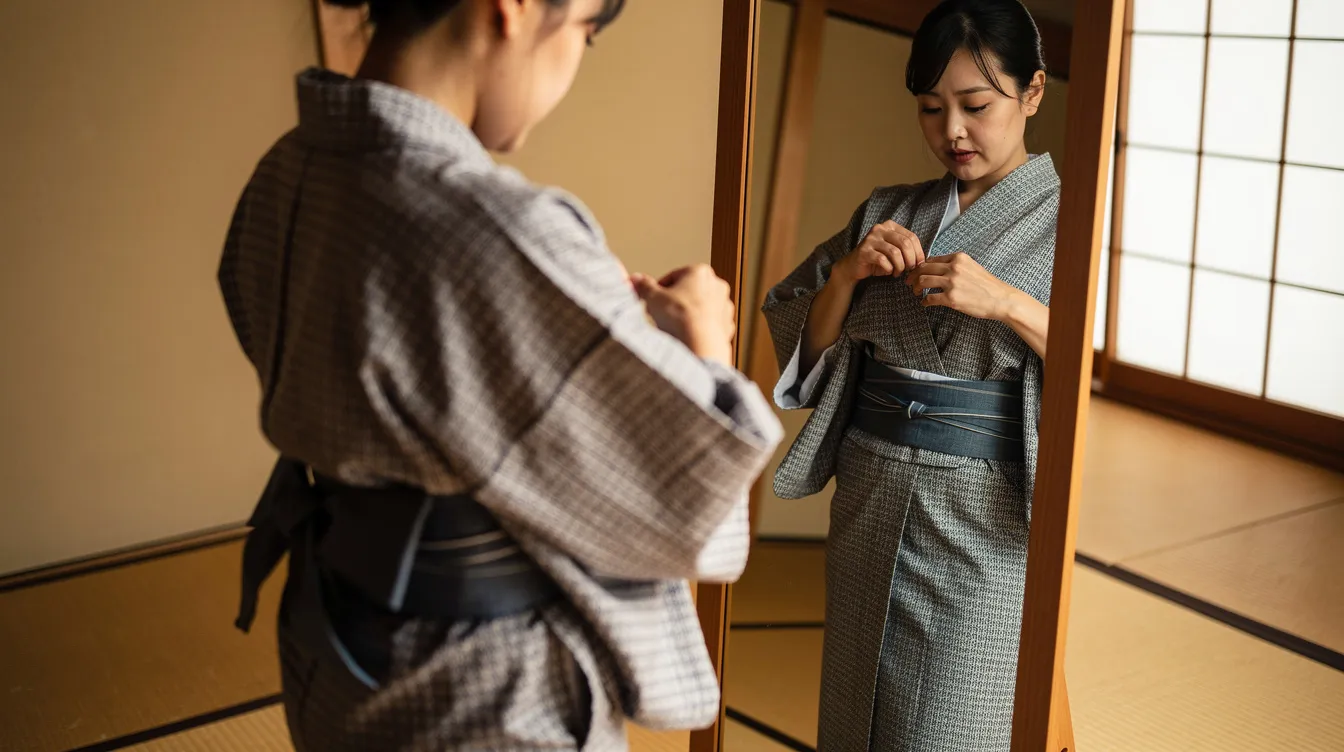
How to Measure Yourself for a Yukata
Use a soft tape, mirror, and helper if possible.
- Height: barefoot, wall to crown, in cm: 160 cm, 172 cm, 185 cm.
- Hips: fullest part of hips and bottom: 96 cm, 112 cm, 130 cm.
- Bust: fullest chest; essential for fuller bust or plus size fit.
- Waist: natural waistline; helpful, though hip measurement usually decides width.
- Optional yuki: Yuki refers to the sleeve length measured from the center back of the neck to the wrist bone.
Write these four numbers down before you shop on our site.
How to Read a Yukata Size Chart
Every brand’s size chart differs, so check AnotherDateNight (ADN) Kimono’s listing before making a choice.
Key terms:
- Mitake refers to the garment length measured from the top shoulder seam to the bottom hem.
- Mihaba refers to the total circumference of the fabric panels combined.
- Yuki is sleeve reach; yukata sleeves are meant to be shorter than standard Western shirts, ideally landing just above the wrist bone.
For women, the ideal garment length is equal to their total height plus or minus 5 cm, with excess length tucked into the waist fold. Most standard women’s yukatas are built to a universal standard length of roughly 163 cm.
To verify if a yukata will wrap safely, check the flat product width. Yukata width should ideally exceed the wearer’s hip measurement by at least 40 cm to ensure a comfortable fit. The flat garment width should be at least 30 to 40 cm wider than the actual hip size to guarantee a safe front overlap. When choosing a yukata, it is recommended to select a hip size that is at least 40 cm larger than your actual hip measurement for comfort.
If your hips are near the maximum, move up to plus size or consider AnotherDateNight (ADN) Kimono’s Custom Tailor-made service.
Plus Size Yukata & Tall Sizes: Finding a Comfortable, Elegant Fit
Many Western, tall, and plus size people fear they will have trouble finding something beautiful. Please keep this in mind: yukata are designed to wrap, not cling.
A plus size yukata usually adds length and width for about 100–140 cm hips and taller heights up to 185–190 cm. Plus-size yukata are available from various brands, with sizes accommodating hips up to 130 cm and Western clothing sizes up to size 26. Online marketplaces like Alinoma offer a wide range of plus-size yukata, with sizes going up to 10L, featuring both modern and traditional designs.
A person 170 cm tall with 120 cm hips will likely need a designated plus size yukata or custom. AnotherDateNight (ADN) Kimono curates large panels, longer hems, and styles chosen for Western proportions.
Adjusting Yukata Length and Width on the Body
Fit is created on the body. To wear a yukata, start by putting it on over your underwear, then fold the left side over the right and hold it in place with your hands before securing it with an obi. In formal dressing language, the right panel goes in first (against your body), then the left panel wraps over the top of it.
Let the hem drop, raise it to ankle height, tie a koshi himo, and smooth the ohashori. To check if a yukata’s length will fit, measure from the base of your neck to your heel and compare it to the yukata length; ideally, the yukata should be about 30-40 cm shorter than your height for a proper fit.
The left front panel should reach toward the opposite hip. If it stops at center, the yukata is too narrow.
For a complete, step-by-step visual walkthrough on wrapping and securing your robe correctly, don't miss our comprehensive guide: [How to Wear a Kimono: Effortless Authenticity with ADN Kimono].
What to Wear Under Your Yukata (Support & Comfort for All Sizes)
A cotton slip or nagajuban-style under-robe prevents transparency and helps you stay cool. Light bras or kimono bras create a smoother line than push-up styles, especially under the obi.
Useful items include koshi himo, a datejime flat belt, and obi-ita. Supportive undergarments in big sizes work perfectly; they do not need to be tiny or special. AnotherDateNight (ADN) Kimono can suggest combinations for tummy, high bust, or narrow shoulders.
Choosing Obi and Accessories for Your Size and Style
Choose accessories you love, not only what seems “slimming.” A half-width obi is recommended for yukata as it is versatile and easy to style, allowing for various bow styles to be tied.
When tying the obi, wrap it around your waist starting from the front, cross it at the back, and tie it in the front, adjusting the ends to hang evenly from your right hip. AnotherDateNight (ADN) Kimono’s Pre-tied Obi (Tsuke Obi) is easier for beginners or limited mobility.
If you want to know why so many beginners are swapping traditional sashes for these modern lifesavers, check out our guide on how to reclaim your time with pre-tied options.
Contrasting obi defines the waist; tone-on-tone feels softer. Geta sandals and zori complete the look. Traditionally, geta are 1–2 cm shorter than foot length, but comfort matters, especially for wide feet; check the geta sandals chart before you buy.
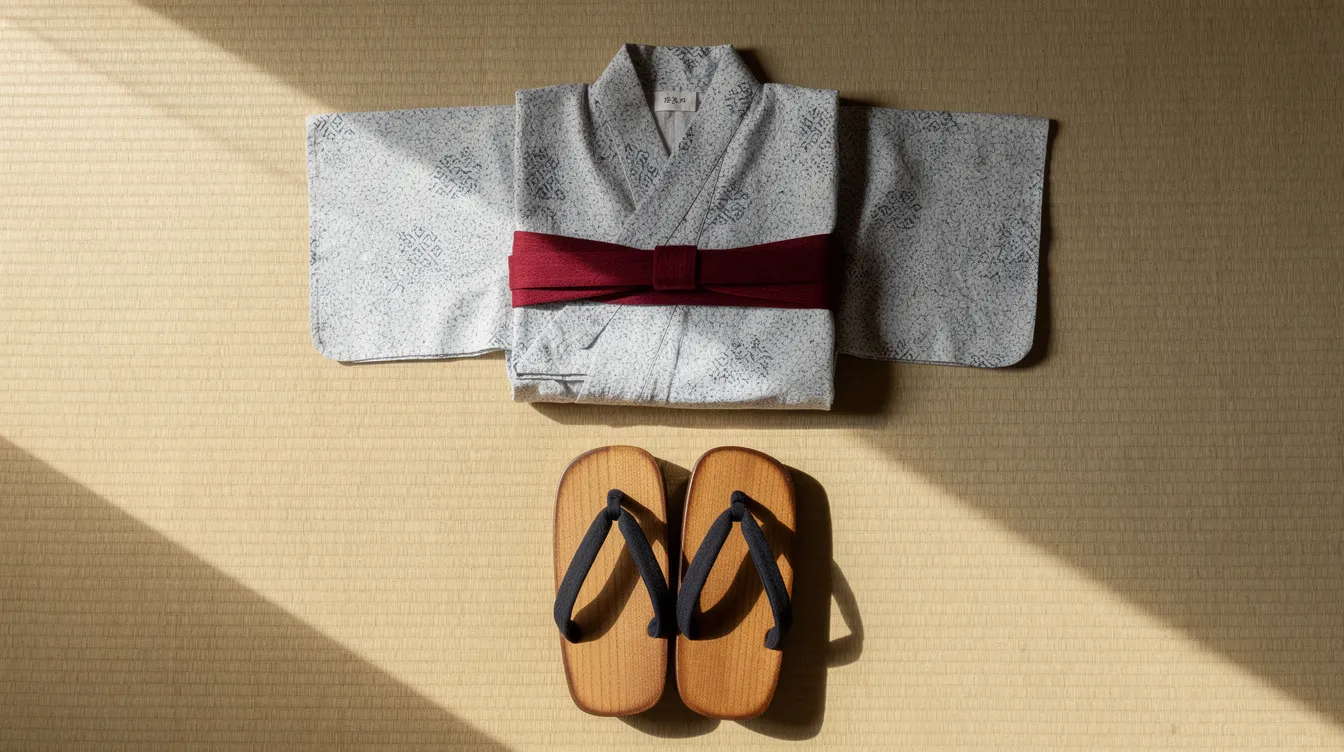
Fabric Matters: Why 100% Cotton Yukata Feel and Fit Better
Yukatas are typically made from lighter materials suitable for summer wear, while kimonos are often made from heavier fabrics and can be worn in various seasons, reflecting their different cultural uses and occasions.
Authentic cotton breathes, absorbs sweat, softens, and drapes better than cheap polyester. Polyester can feel plasticky, trap heat, and show lines. AnotherDateNight (ADN) Kimono prioritizes Japanese-woven cotton from japan traditions, with prints that create balance without overwhelming the wearer.
Special Notes for Men’s, Women’s, and Children’s Yukata Sizing
For women, choose slightly longer rather than shorter for a neat ohashori. For men, the ideal garment length is their total height minus 25 to 30 cm as there is no waist fold. Men’s yukatas are worn straight down without any waist fold, requiring a more precise initial length.
Men should also consider shoulders and upper body. Children’s yukata are often made to adjust as they grow. AnotherDateNight (ADN) Kimono’s Custom Tailor-made service can create matching family sets for festivals or photos.
Yukata vs Japanese Kimono: Sizing and Seasonal Differences
A yukata began as a casual bathrobe-like summer robe and can still feel like refined loungewear, though it is now worn at festivals, inns, and summer events. A kimono is usually more formal, layered, and structured.
Both use length and width principles, but kimono fit is less forgiving because layers and sleeves must sit precisely. Beginners often find yukata easier, lighter, and more suitable for warm weather or bare feet in geta sandals.
If you love light, breathable summer styles but want a modern, western-fused twist, you might also want to check out [The Rise of Lace Kimonos: A Fusion of Traditional and Western Fashion]
When to Choose Custom Tailor-Made Yukata
Custom is not a failure of standard sizing. It is simply the perfect way to honor your body.
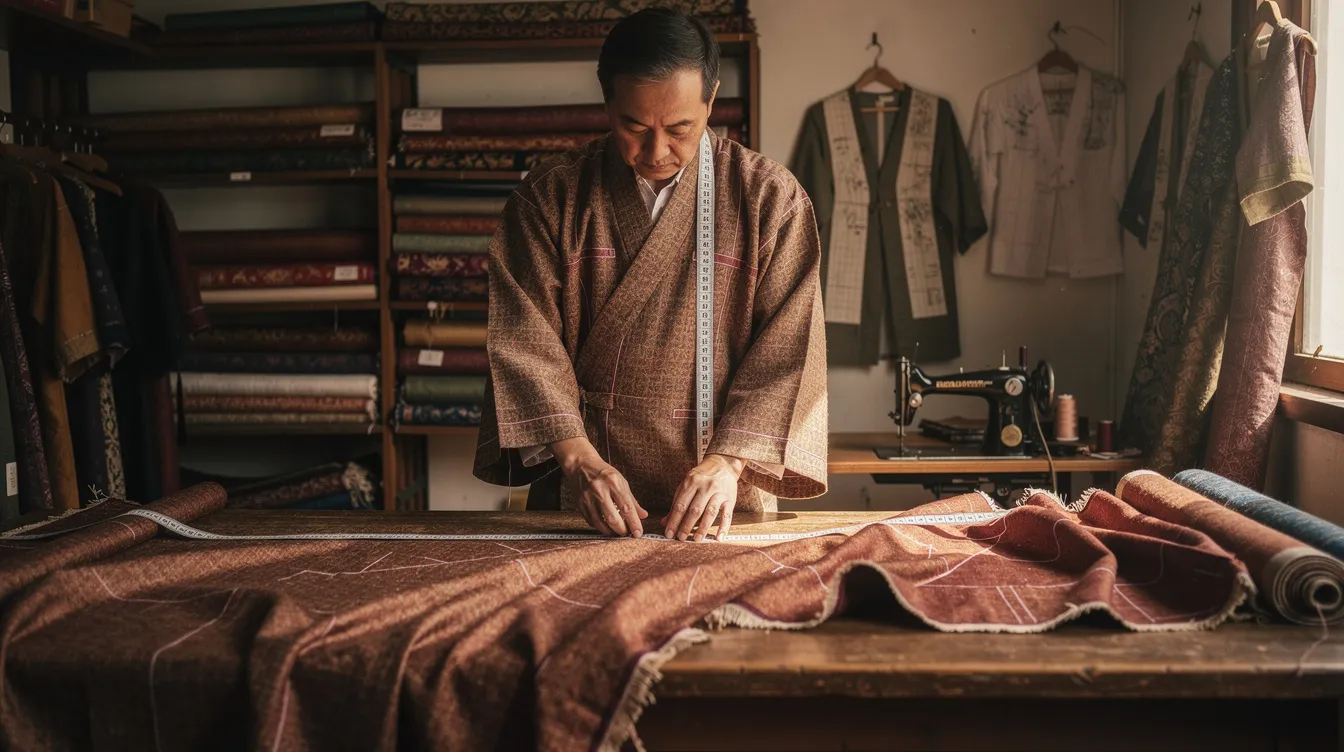
Choose AnotherDateNight (ADN) Kimono’s Custom Tailor-made service if you are 180 cm+, over 130–135 cm hips, athletic, very busty, broad-shouldered, or need mobility adjustments. We can adjust sleeve length, body width, and preferred hem: ankle, instep, or floor-grazing. Once your pattern is made, future yukata or japanese kimono orders become easy.
Final Checklist & Next Steps with AnotherDateNight (ADN) Kimono
Before you place an order, pause and check:
- Height, hips, bust, and waist measured in cm
- Yukata or kimono chosen for the occasion
- 100% cotton preferred for comfort
- Obi selected, including Pre-tied Obi if desired
- Width prioritized if between sizes
Shopping online for yukata offers the widest variety of colors and styles, especially for plus sizes, as they are often considered specialty items not available in all stores. AnotherDateNight (ADN) Kimono product pages include clear charts so you can compare your numbers directly.
Browse our yukata collection, plus size yukata options, geta, obi, and accessories-or contact us to begin a Custom Tailor-made order. We would be happy to help you find a fit you feel confident wearing.