
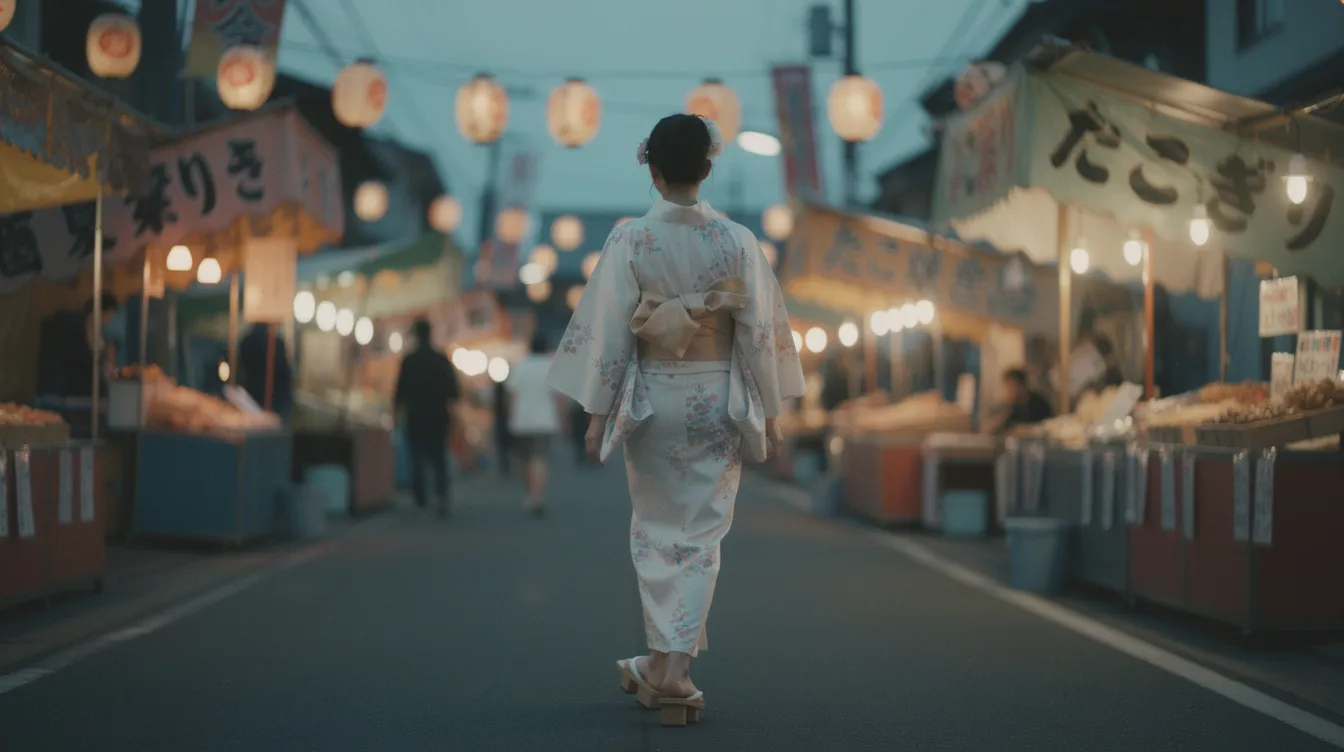
Yukata vs. Kimono: 4 Simple Ways to Tell the Difference
Introduction: Is a Yukata a Kimono?
If you are new to traditional japanese clothing, the first question is usually simple: is a yukata a kimono? The short answer is yes, a yukata is technically a type of kimono. But in modern japanese clothing, kimono and yukata are usually treated as separate categories because they have different fabrics, layers, footwear, seasons, and levels of formality.
The word kimono literally means “thing to wear,” and the kimono is Japan's national dress symbolizing elegance and heritage. Historically, traditional japanese garments evolved over many centuries, with roots reaching back to the heian period and later everyday popularity during the edo period. Today, however, when people compare yukata vs kimono, they are usually asking: “Which one should I wear, and when?”
At ADN Kimono, we make traditional japanese fashion feel easier to understand and more effortless to wear. Here is the quick answer before we go deeper:
- Fabric: yukata are light, unlined, and summery; kimono are often richer, structured, and lined.
- Collars and undergarments: formal kimono use a nagajuban inner robe; yukata are worn more simply.
- Footwear: yukata are paired with geta; formal kimono are paired with tabi socks and zori.
- Occasion: yukata are casual summer wear; kimono range from casual wear to formal wear for ceremonies.
Difference 1: Fabric & Materials – How the Garment Feels
The easiest way to understand yukata vs kimono is by touch. A yukata feels like relaxed casual summer wear: light, breathable, and easy to move in. A japanese kimono, especially a formal kimono, feels more structured and carefully finished.
Yukatas are usually made from lightweight cotton or linen. Yukata is typically made from cotton or linen, and modern versions may also use cotton blends or breathable modern polyester. Yukatas are typically unlined and made from a single layer of fabric, which is why they work so well in the hot summer months. The word yukata translates to "bathing cloth", and yukata can be worn at ryokans after bathing, which explains why a ryokan style yukata still feels relaxed and robe-like.
Kimonos are traditionally crafted from luxurious fabrics such as silk. Kimonos are traditionally made from silk, linen, and hemp, while modern kimonos can be made from polyester and rayon. Kimonos are often made from silk and other expensive fabrics, and many formal pieces use refined weaves, hand-dyeing, or brocade. Kimonos often have an internal lining for warmth, especially in colder weather, making the whole garment heavier than a yukata.
Here is what to notice when comparing kimono and yukata:
- Yukata: cotton, linen, or breathable fabrics; usually matte, soft, and quick-drying.
- Kimono: silk, wool, linen, hemp, polyester, or rayon; often smoother, heavier, and more structured.
- Yukata: typically unlined and ideal as a summer kimono for festivals, ryokan stays, and warm evenings.
- Kimono: often lined for autumn and winter, with more body and a polished look.
- Yukata: printed or woven patterns designed for frequent washing.
- Kimono: may feature yuzen dyeing, embroidery, or Nishijin-style brocade for formal occasions.
A kimono robe made for ceremony can look beautiful, but it may not be the most comfortable choice for a humid August evening in japan. That is exactly where the japanese yukata shines.
Spotting Fabric Differences at a Glance
If you are shopping online or looking at people wearing traditional clothing near kiyomizu temple in Kyoto, use these simple cues.
A yukata usually has matte cotton, no lining, and a light drape that feels close to a summer dress or robe. A kimono may have a subtle silk sheen, a visible lining, and more “weight in the hand.” If the outer layer looks crisp and the fabric holds its shape, it is more likely to be a kimono than a yukata.
Men’s yukata are often especially easy to spot. They commonly come in muted colors such as indigo, charcoal, navy, and grey, with simple stripes, checks, or geometric patterns. This makes men's yukata ideal for summer festivals, relaxed hotel wear, and ryokan loungewear.
At ADN Kimono, we label fabrics clearly so you can see whether a piece is a yukata, a summer kimono, or a more formal kimono piece before you buy. We also photograph texture, drape, and lining details because online shoppers should not have to guess.
Difference 2: Collars & Undergarments – What Goes On Underneath
The neckline is one of the clearest visual clues in the yukata vs kimono question. Look closely at the collar: if you see a second white collar underneath, the outfit is probably a kimono worn with a nagajuban.
Formal kimono are worn over a nagajuban, a long under-robe whose collar peeks out beneath the main collar. Undergarments for kimono include a nagajuban and specific footwear like tabi. This double-collar look is common with formal kimono, including iro muji, homongi, and other refined styles worn for ceremonies, tea parties, and special occasions.
Yukata are typically worn without an undergarment, unlike kimonos. Traditional yukata are worn without a nagajuban, especially in summer, so the neckline shows one soft collar instead of two layers. Yukatas use a soft collar that lies flat and shorter sleeves, while kimonos feature a stiff standing collar and longer sleeves.
For comfort, knowing what to wear under a yukata matters. We recommend:
- A light camisole or undershirt for breathability.
- Moisture-wicking shorts or a simple slip for coverage.
- A dedicated yukata slip if you want a smoother line under the fabric.
- Minimal layers, especially in humid weather.
One important cultural note: both kimono and yukata should be wrapped left over right for living wear. You may see incorrect advice saying, “Wrap the right side over the left when wearing a yukata,” but right over left is reserved for dressing the deceased. For respectful wear, always place the left side over the right side.
To dress neatly, use a sash to secure the yukata around your waist before adding the obi. Ensure the yukata hem reaches your ankles for proper length, then tie the obi around 3 centimeters below the waist for a neat look.
How Collars Signal Formality
A visible white inner collar from a nagajuban usually means kimono, often formal kimono. A single, unlined collar against the neck usually means yukata or a very casual summer kimono.
For women, the collar is often set slightly open at the back of the neck for elegance. For men, the collar is typically worn closer to the neck. Japanese women wearing formal kimono may also use small padding or ties to create a smooth silhouette, while a yukata collar can be worn a touch looser for a relaxed summer mood.
To keep the collar neat:
- Smooth the collar before tying the waist sash.
- Keep the back collar balanced, not pulled too wide.
- Use simple collar stays or an under-layer if you want a sharper line.
- Choose an ADN Kimono set with beginner-friendly undergarments if you want the neckline to sit correctly with less effort.
Difference 3: Footwear & Socks – Geta vs Zori
Your feet often reveal whether you are seeing a yukata or a kimono. This is especially true at summer festivals, weddings, graduation ceremonies, or ryokan corridors.
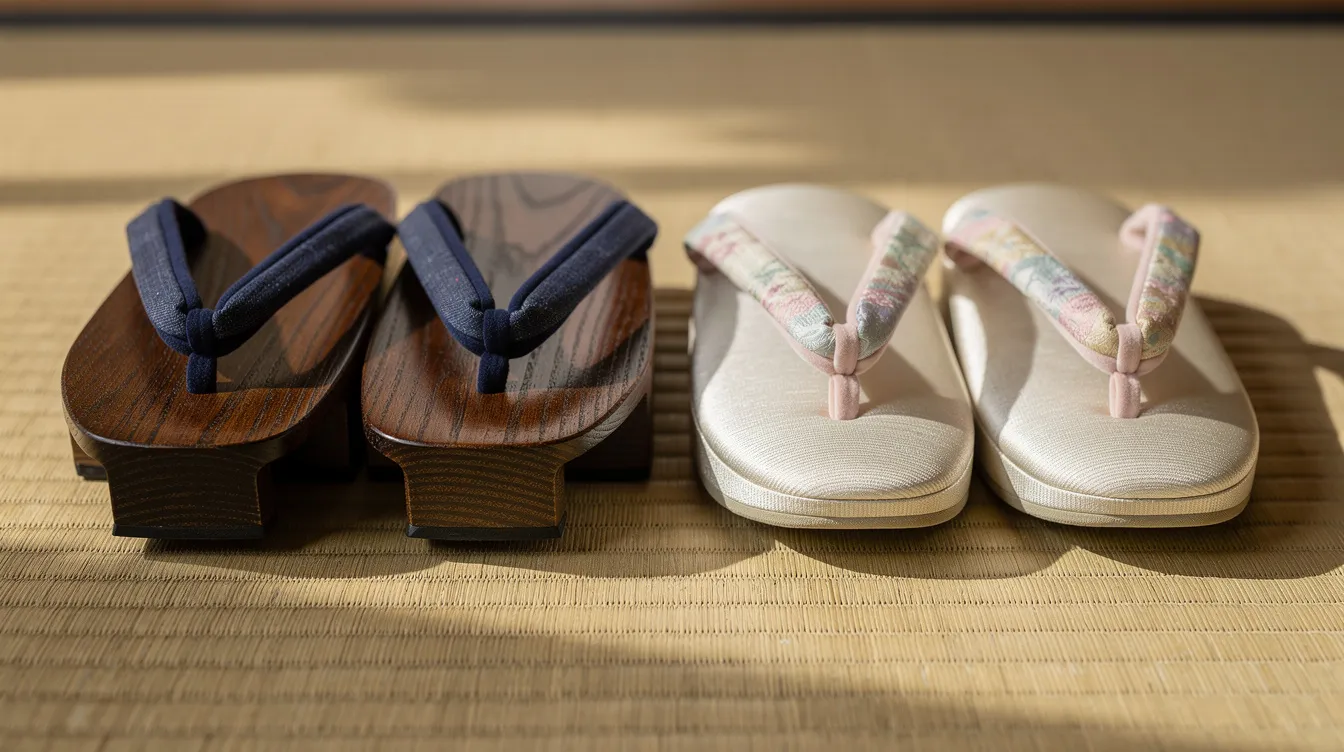
Yukata can be worn barefoot with geta sandals. Geta sandals are commonly worn with yukata, and their wooden soles create the distinctive clacking sound associated with matsuri evenings and fireworks nights. Yukata is traditionally worn barefoot or with very low-cut socks in casual settings.
Formal kimono are different. Zori sandals are typically worn with formal kimonos, and tabi socks are worn with both kimono and zori. For weddings, coming-of-age ceremonies, tea ceremony gatherings, and other formal occasions, white tabi socks and traditional zori create the expected polished look.
Here is the simple footwear breakdown:
- Wear yukata with bare feet and geta for festivals, fireworks, and ryokan stays.
- Wear kimono with tabi socks and zori sandals for formal events.
- Choose traditional zori in fabric, leather, vinyl, or brocade for a refined outfit.
- Allow modern flexibility for casual styling, but keep the textbook rule in mind.
In contemporary japanese clothing, some people style a casual japanese kimono with geta, or a linen summer kimono with relaxed sandals. That can be perfectly acceptable depending on the setting and personal taste. But if the event is formal, zori and tabi are the safer choice.
Common Accessories Around the Feet
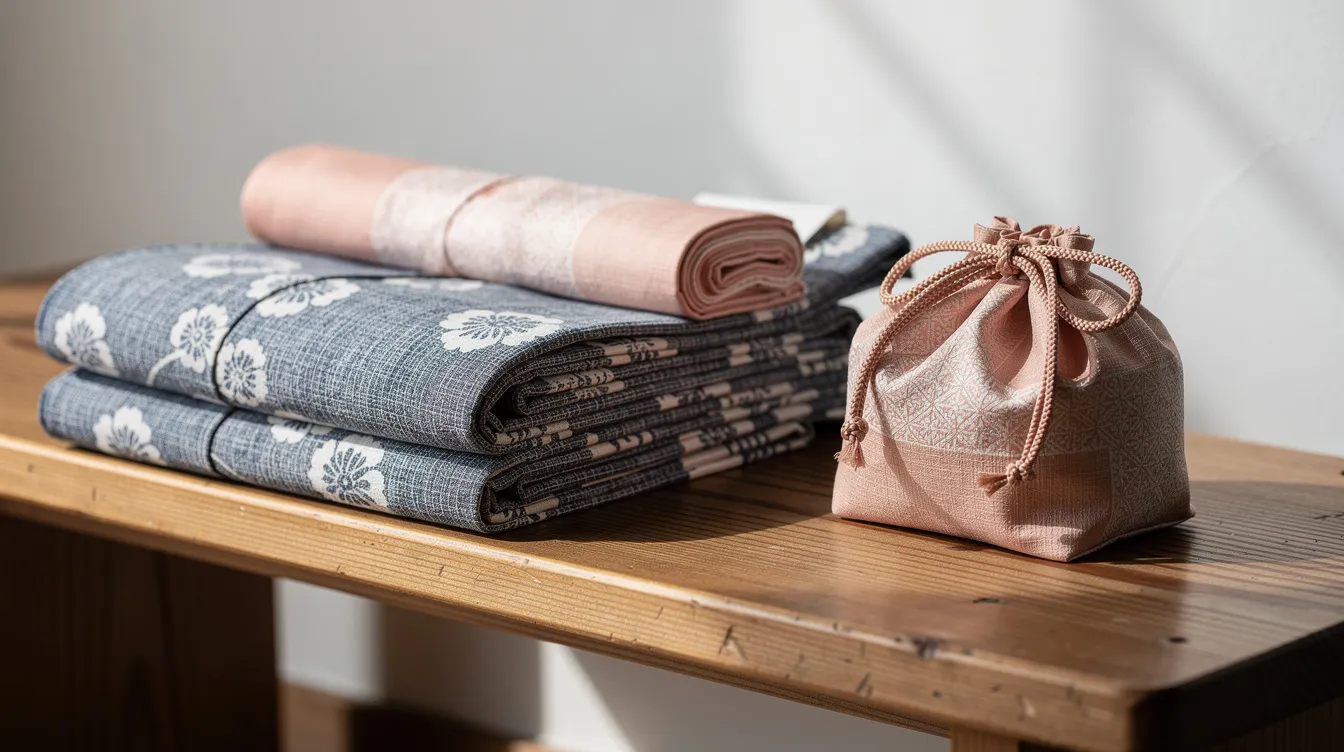
Footwear also connects to the rest of the outfit. Hanao straps on geta or zori can echo the color of the obi. Small kinchaku drawstring bags are also common accessories with both yukata and kimono.
A few finishing details help the outfit feel intentional:
- Tabi socks: standard with kimono, sometimes colored for casual looks.
- Hanao straps: coordinated with the yukata pattern, obi, or zori.
- Drawstring bags: small, practical, and especially charming with festival wear.
- Geta: relaxed, summery, and associated with japanese yukata.
- Zori: refined and suitable for formal wear.
At ADN Kimono, we curate footwear and accessories so a beginner does not need to build the outfit from scratch. A coordinated set can shift the mood from “relaxed festival” to “refined formalwear” immediately.
Difference 4: Occasions & Seasonality – When to Wear Which
If you remember only one rule, make it this: yukata equals casual summer and leisure; kimono equals a wider range from casual to very formal, all year round.
Yukata are commonly worn at summer festivals. Yukata are usually worn in summer for casual occasions, especially July and August matsuri, fireworks nights, and casual strolls in Kyoto or Tokyo. Yukatas are primarily worn at casual summer events, and they are also standard in many ryokan and onsen settings after bathing.
Kimonos are worn for formal events like weddings and graduations. Kimonos are worn for formal and semi-formal occasions, including weddings, graduations, coming-of-age day, tea ceremony events, shrine visits, and New Year celebrations. A kimono is a more formal structured often lined garment, and kimonos require meticulous dressing and are reserved for important milestones.
There are also many types of kimono:
- Furisode is worn by unmarried women at formal events.
- Tomesode is the formal kimono for married women.
- Uchikake is worn as bridalwear and for theater performances.
- Iro muji is a solid-color kimono that can be dressed up or down.
- A formal kimono type may include family crests, richer fabric, or a more elaborate obi.
- Women's kimono often vary by age, marital status, and occasion.
- Men's kimono may include montsuki and hakama for highly formal settings.
Seasonality matters too. Yukata are almost always worn during warm months, roughly June to early September in japan. Kimono can be worn year-round: unlined hitoe and summer kimono for heat, lined awase for autumn through spring, and motifs like cherry blossoms or maple leaves chosen to match the season.
Use these prompts:
- Summer fireworks in Tokyo: wear yukata.
- Friend’s wedding: wear kimono, not yukata.
- Tea ceremony class: wear kimono, usually not yukata.
- Mountain ryokan after bathing: wear yukata.
- Autumn shrine visit: wear kimono or a layered casual kimono.
- Relaxed hotel stay: wear a ryokan style yukata.
This is one reason the yukata vs choice matters in japanese society. The garment communicates respect for the place, season, and occasion.
Men’s Yukata and Everyday Styling
Men’s yukata fit easily into modern wardrobes. They are popular for summer festivals, relaxed dates, home lounging, and hotel stays. Most designs use muted colors, stripes, checks, or minimal motifs, paired with a simple obi and geta.
For daily styling outside japan, you can also blend traditional japanese pieces with western clothing in subtle ways. A haori over jeans, a yukata-inspired jacket with western clothes, or a men's kimono layered over a plain shirt can feel modern without turning traditional dress into costume.
A respectful note on cultural appropriation: generally speaking, many japanese people appreciate thoughtful interest in kimono and yukata when they are worn with care, proper wrapping, and cultural awareness. Avoid mocking, caricature, or costume-like styling. Choosing authentic pieces and learning basic etiquette is the best place to start.
Yukata & Kimono Accessories: Obi, Obi Options, and Simple Styling
The obi can tell you almost as much as the garment. Obi belts, tying styles, and accessories immediately signal whether the outfit is relaxed or formal. Obi is a wide belt for women's kimonos, though men also wear narrower obi styles.
Yukata typically use a simpler hanhaba obi. A hanhaba obi is half-width, easier to tie, and perfect for playful bows. A soft heko obi is another relaxed option, especially for comfortable summer styling. These are ideal when you want to wear yukata without dealing with many layers or complicated accessories.
Formal kimono often use more structured obi, such as nagoya obi or fukuro obi. A fukuro obi is common for formal occasions and may be paired with obi-age, obi-jime, and other details that create a refined finish. These extras are rarely used with a simple summer yukata.
Simple styling ideas:
- Choose a solid obi if the yukata pattern is busy.
- Echo one accent color from the print in the obi or drawstring bag.
- Pair muted colors with subtle metallics for a polished look.
- Use contrast carefully: navy yukata with a cream obi feels crisp and classic.
- Add haori himo only when wearing a haori jacket that calls for it.
At ADN Kimono, we also offer pre-tied tsuke obi options. These save time, reduce frustration, and help beginners achieve a clean bow without learning a full tying method on day one.
Yukata vs Kimono: Quick Comparison Recap
You do not need to memorize every formal rule to choose well. For most beginners, these four signs are enough.
- Fabric: yukata means unlined cotton or linen; kimono means silk and other richer fabrics, often lined.
- Layers: yukata means no nagajuban; kimono means nagajuban with a visible white collar.
- Feet: yukata means barefoot with geta; kimono means tabi socks with zori for formal looks.
- Use: yukata means casual summer kimono for festivals and ryokan; kimono means ceremonial and formal japanese clothing year-round.
That is the heart of yukata vs kimono. The more you wear and observe, the easier it becomes to notice the difference instantly.
ADN Kimono product descriptions clearly label whether an item is a yukata, summer kimono, casual kimono, or formal kimono. We also suggest suitable occasions, obi choices, undergarments, and common accessories so your outfit feels complete rather than confusing.
Conclusion: Choosing the Right Piece with ADN Kimono
Understanding yukata vs kimono becomes simple once you look at four things: fabric, collar and undergarments, footwear, and occasion. Yukata are light, single-layer, and worn casually in summer. Kimono are more structured, often lined, and used across formal occasions, semi-formal gatherings, and seasonal celebrations.
Traditional japanese clothing should not feel intimidating. Even in japan, many people now wear yukata mainly for special summer days, ryokan stays, and festivals, so starting with a japanese yukata is a natural and approachable first step.
Explore ADN Kimono’s curated collections of japanese yukata for summer festivals, relaxed men’s yukata, and elegant kimono options for special occasions. Our time-saving accessories, including pre-tied tsuke obi, coordinated obi and geta sets, light undergarments, and easy styling pieces, make it simple to wear kimono and yukata with confidence.
If you want to go deeper, browse our upcoming guides on what to wear under a yukata, how to choose an obi, and how to pack a yukata for travel. Traditional style is not only something to admire from a distance. With the right guidance, it becomes something you can enjoy, move in, and make your own.