
How to Wash a Yukata at Home: Simple Steps from ADN Kimono
A yukata is one of the most approachable garments in Japanese culture - lightweight, comfortable, and perfect for summer festivals, travel, or relaxing at home. But when it comes to washing, many first-time owners hesitate. This guide from ADN Kimono walks you through how to wash a yukata at home, plus how to dry, iron, fold, and store it properly.
Quick Answer: Can You Wash a Yukata at Home?
Yes. A 100% cotton yukata can usually be washed at home if you follow specific care steps. The three non-negotiable rules: use cold water, a mild detergent, and careful drying. These protect the fabric from shrinkage and prevent color fading.
If your yukata is made from silk, linen, or an unknown blend - or if it's a vintage piece - check the care label first. These materials often require professional cleaning or dry cleaning. Modern cotton yukata from ADN Kimono are designed to be beginner-friendly for home care. The simple steps below cover everything you need.
What to Do Right After Taking Off Your Yukata
Good care starts the moment you stop wearing the garment, not on wash day. Before you take it off, make sure you know what to wear under a yukata to minimize sweat stains in the first place. [What To Wear Under a Yukata: Expert Guide from ADN Kimono]
- Hang the yukata immediately in a well ventilated room, in the shade, to air out sweat and moisture.
- Never fold or store it while even slightly damp - trapped moisture leads to mold, yellowing, and musty odors.
- Use a wide hanger or laundry pole, spreading sleeves and hem so the fabric hangs straight along the seams.
- Do a quick spot check: look for mud, food stains, or dirt around the collar, arm holes, and shoulders.
- Light sweat marks can often be treated by pressing a damp, well-wrung cloth against the area before a full wash.
Should You Wash at Home or Use Professional Cleaning?
The decision depends on fabric type, construction, and how dirty the yukata is.
- Safe for home washing: 100% cotton yukata with light sweat or everyday dirt. Home washing is suitable for cotton yukata with light stains.
- Better with professionals: Silk kimono, silk obi, wool, or linen garments - professional cleaning is recommended for silk or linen yukata. Heavy oil stains, wine, or dark soy sauce spots are also strong candidates for dry cleaners.
- Always check the care label for symbols indicating hand wash, machine wash, or dry clean only.
Antique or precious vintage yukata should be evaluated by a specialist familiar with traditional Japanese garments. When unsure, choose professional cleaning to avoid irreversible color bleeding or shrinkage.
How to Hand-Wash a Cotton Yukata (Recommended Method)
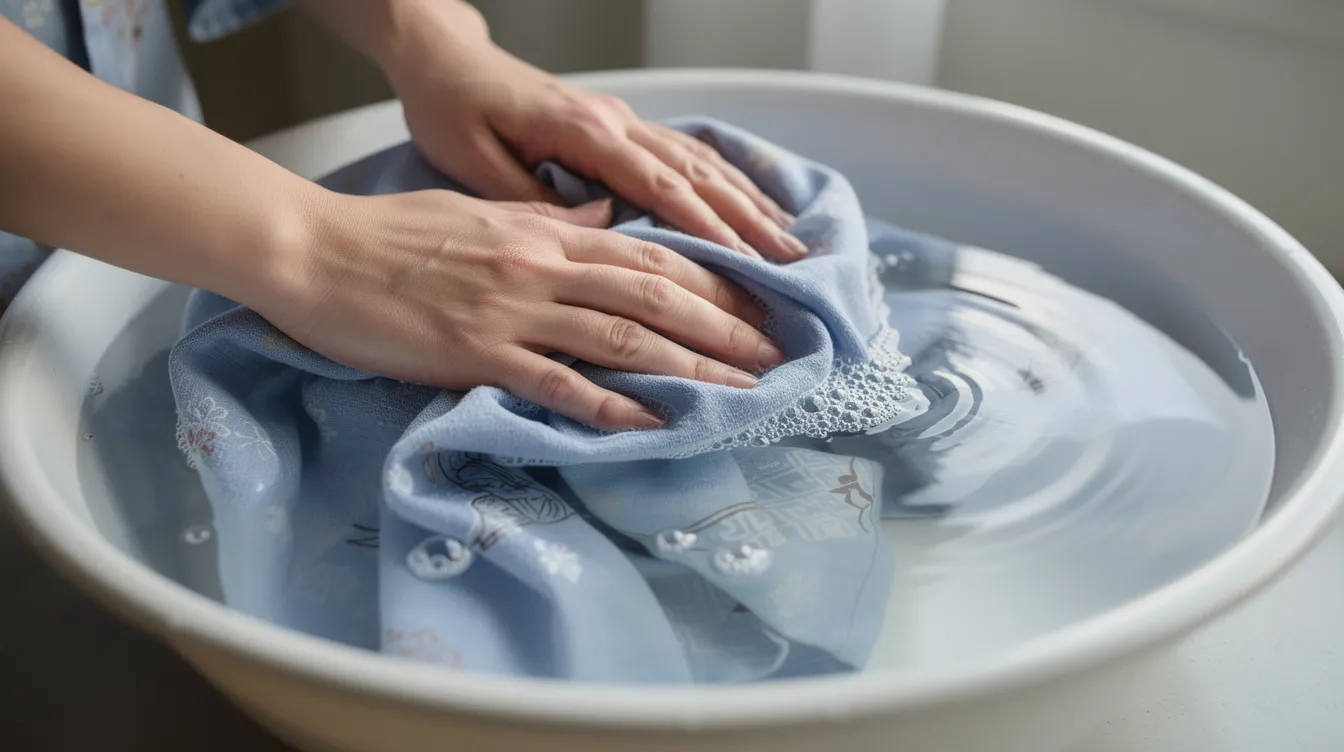
Gentle hand-washing with cold water is ideal for cotton or linen yukata. We recommend washing by hand as the safest method. Avoid washing yukata with hot water to prevent shrinkage.
- Fill a clean basin or bathtub with cold water - never hot. Keep the temperature below 30 °C (86 °F). Indigo-dyed yukata should be washed in very cold water to prevent bleeding.
- Dissolve a small amount of neutral detergent designed for delicate clothes. Avoid bleach and strong enzymes. Use a neutral detergent to avoid fading when washing yukata.
- Turn the yukata inside out, fold it loosely, and gently press it into the soapy water without twisting.
- Gently wash by lightly agitating for 3–5 minutes. Softly press - never scrub - areas like the collar and hem where sweat and dirt accumulate.
- Check the water color. Some dye release is normal during the first wash, especially with dark indigo patterns. Wash the yukata separately from other clothes.
- Drain the soapy water and refill with clean cold water. Rinse by pressing and lifting until no detergent remains (usually 2–3 rinses). Adding vinegar to rinse water can help fix indigo dye.
- Remove excess water by pressing the fabric between your hands or rolling it inside a clean bath towel. Avoid wringing or rubbing - this distorts the shape.
If the yukata is heavily soiled, gently wash it by hand and pre-treat stubborn spots with diluted detergent, tapping lightly with your fingers.
Machine Washing Your Yukata Safely
Machine washing can work for sturdy cotton yukata, but only with protection and delicate settings. Always confirm the care label allows it.
- Fold the yukata, turn it inside out, and place it in a large laundry net. A laundry net protects the yukata fabric during machine washing.
- Wash alone or only with similarly colored cotton items to reduce color transfer to other clothes.
- Select a gentle cycle or delicate cycle, cold water only, and the shortest possible spin. If your machine has a "hand wash" or "wool" program, use that preset.
- Use a small amount of mild, bleach-free detergent. Skip fabric softener.
Avoid machine washing entirely if: the fabric is old or visibly weak, contains metallic threads or embroidery, or the label says dry clean only. Remove the yukata from the washer immediately after the cycle ends to prevent creasing.
Drying Your Yukata: Shade, Shape, and Tumble Dry Precautions
Drying matters as much as washing. High temperatures increase dye fading in yukata fabric.
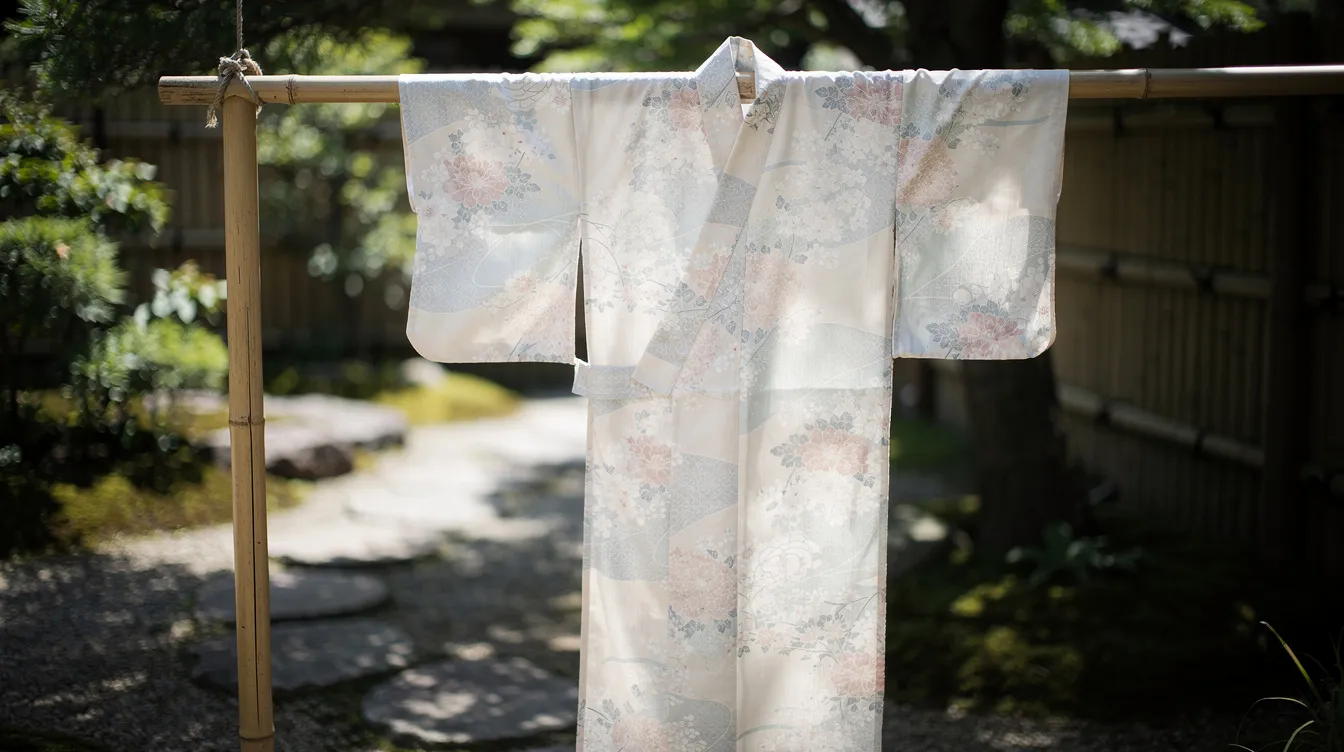
- Hang the yukata by the center back seam on a wide hanger or pole. Air dry in the shade - avoid direct sunlight to prevent fabric fading.
- Smooth the collar, sleeves, and hem by hand to restore the garment's shape. Spread out sleeves while drying for proper air circulation.
- Hang yukata in a well-ventilated area to drip dry completely. Indoors, a fan or open window improves airflow without harsh light.
On tumble drying: Do not tumble dry yukata as a standard method. If the label allows, use a low heat setting for a very short tumble (under 10 minutes) only to remove excess moisture. Finish drying by hanging the yukata to air dry completely. High heat or full tumble cycles shrink cotton, distort seams, and damage the fabric.
Check the yukata once or twice during drying. Gently pull it into shape to minimize wrinkles.
Ironing and Steaming: Keeping Your Yukata Smooth
Correct ironing extends your garment's life and keeps its natural straight lines sharp.
- Ironing should be done with a medium-temperature iron and a pressing cloth. Test on an inside seam first.
- Iron the yukata inside out to protect colors, prints, and any delicate dye work.
- Place a thin pressing cloth - a cotton handkerchief works well - between the iron and the fabric.
- Work in sections: collar, front panels, back panel, then sleeves, following the weave direction.
- Light steam helps with stubborn wrinkles, but never let the iron sit in one spot too long. A garment steamer is a cool alternative for beginners - keep a small distance to avoid water spots.
- Over-pressing can make cotton shiny, so gentle pressure beats heavy, repeated strokes.
Folding and Long-Term Storage
Ensure the yukata is completely dry and cool before folding - even slight moisture causes mold. Excessive washing can degrade yukata fabric, so proper storage between wears reduces how often you need to wash.
- Fold along the center back seam, align the sleeves, and create clean vertical folds that follow the garment's natural structure (inspired by the traditional hon-datami method).
- Store folded yukata in a breathable fabric bag or wrap in traditional tato-shi wrapping paper. [Yukata Sizing Guide: How to Choose the Perfect Fit] Avoid plastic covers that trap humidity. If you receive your yukata back from dry cleaners in plastic, remove plastic covers after dry cleaning to prevent humidity buildup.
- Keep the stored yukata in a cool, dry place away from heaters, direct sunlight, or damp walls.
- Place natural, non-scented insect repellent sheets or herbal sachets (cedar, lavender) nearby to protect against moths.
- In humid climates, air the yukata every few months by unfolding and hanging it in the shade briefly.
Spot Cleaning Common Yukata Stains
Quick spot cleaning can save your yukata from a full wash - essential during festival season.
|
Stain Type |
Method |
|---|---|
|
Mud (hem) |
Let dry fully, brush off, then wipe remaining marks with diluted detergent |
|
Sweat/odor (collar, underarms) |
Spray cold water + mild detergent, blot with a clean cloth |
|
Food or drink |
Immediately dab - never scrub - with a damp cloth, then soak the spot with mild soap |
Avoid rubbing or using bleach on dark indigo or vivid printed cotton. Stubborn or old stains should be shown to a professional cleaner who understands traditional garments.
Home Washing vs Professional Cleaning: How to Choose
Home washing offers convenience and cost savings. Professional cleaning offers security for valuable or delicate pieces.
- Consider fabric type, sentimental value, and stain type before deciding.
- Everyday 100% cotton yukata worn in 2026 summer festivals are usually fine for careful home washing.
- Formal silk items, heavily stained pieces, or fragile vintage yukata from the 1970s or earlier are better candidates for dry cleaning services.
- Professional cleaning costs more but reduces the risk of color loss, shrinkage, and distortion.
- Beginners: start with gentle hand washing on a less expensive cotton yukata to build confidence before caring for more precious clothing.
Conclusion: Enjoy Your Yukata for Years
Carefully washing in cold water, drying in the shade, and storing with attention to moisture and heat will keep a cotton yukata beautiful for many summers. These simple steps quickly become an easy routine - and respecting the garment's fabric and structure is a meaningful way of honoring Japanese tradition in daily life.
Explore ADN Kimono's selection of high-quality cotton yukata, obi belts, and accessories - all designed with easy home care in mind. With the right method, a well-chosen yukata from Japan can accompany festivals, travels, and quiet evenings at home for years to come.